Supplement Dropshipping in 2026: The Playbook for Building a Profitable Brand Without Inventory
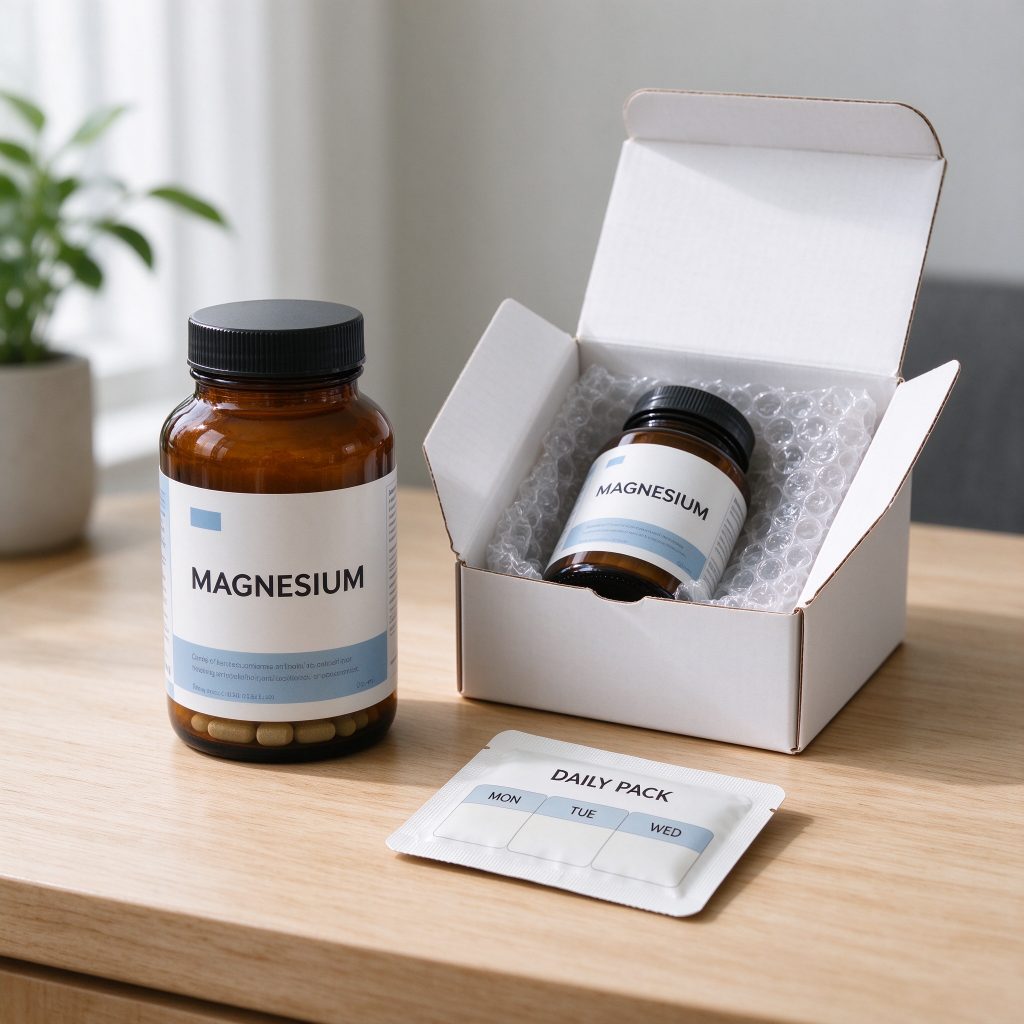
Category: Selling & Growth | Reading time: 8 min | Audience: private-label health brand owners and ecommerce entrepreneurs
The short version: Supplement dropshipping is alive and highly profitable in 2026 — but only if you treat it like a brand business, not a product-sourcing game. The U.S. dietary supplement market is worth roughly $195 billion in 2025, online channels already capture 24.8% of global supplement sales, and the same category data that made big brands rich is now available to a single operator with a Shopify store. This guide breaks down exactly how to run supplement dropshipping the right way: product selection, supplier models, FDA compliance, and the retention engine that turns a first order into a customer for life.
What Is Supplement Dropshipping?
Supplement dropshipping is an ecommerce model where you sell branded nutritional products online without holding inventory. A customer orders from your store; your supplier or fulfillment partner picks, packs, and ships the product under your brand; you keep the difference between the retail price and your cost.
What makes supplement dropshipping different from generic dropshipping is the product itself. Supplements are consumable, recurring, and trust-driven — which means the model rewards operators who build a real brand instead of running a random product store. In 2026, the winners in this space aren’t the ones with the cheapest supplier; they’re the ones with a clear audience, a compliant product, and a repeat-purchase engine.
Why it matters now: online stores grew from 16.2% of global supplement sales in 2023 to 24.8% in 2026, with ecommerce growing at a 16.4% CAGR — roughly 2.5x the pace of the overall category. The channel shift is still early, and it’s the single biggest tailwind for independent brands.
Why Supplement Dropshipping Still Works in 2026
Every year someone declares that dropshipping is dead. The supplement niche keeps proving otherwise. Here’s the evidence:
- A massive, growing market. The global dietary supplement market reached roughly $195 billion in 2025 and is projected to grow at a 6.3% CAGR through 2034. You are selling into a category that grows even in recessions.
- Category-level margins are strong. Physical supplement products typically support a 2-3x markup over supplier cost, with realized margin s running between 40-70% depending on product and pricing strategy.
- Consumers buy on problem, not on brand loyalty — at first. Symptom-first shopping means a well-positioned store can win customers away from incumbents by naming the problem, not by outspending big brands.
- The infrastructure is mature. Reliable private-label and white-label supplement manufacturers now offer low MOQs, custom packaging, compliant labeling, and global fulfillment — which used to require a factory contract and six figures.
The catch: margins this good attract competition. The brands that sustain profitability in 2026 do three things consistently — they pick a precise customer problem, they partner with a compliant manufacturer, and they keep marketing active beyond launch.
How to Choose Supplement Products That Actually Sell
Product selection is 50% of your outcome in supplement dropshipping. Skip the “one random bestseller” approach and follow demand data instead. These are the categories with the strongest 2026 momentum:
| Product Category | Why It’s Moving | Data Signal |
|---|---|---|
| Magnesium (glycinate, citrate, taurate) | Sleep, stress, muscle recovery — three of the biggest problem searches in one ingredient | Google search volume for “magnesium supplements” up 200%+ since 2023; fastest-growing category on Amazon in 2025, +40% YoY |
| Creatine monohydrate | Mass-market adoption beyond gym culture; female fitness content is fueling demand | 450K monthly searches, +83% YoY |
| Vitamin D3 + K2 combos | Shoppers now expect the pairing; single-ingredient D3 listings are losing shelf share | D3 remains a top seller; D3+K2 (MK-7) is the fastest-moving format |
| Functional gummies | Conversion lift vs. capsules; gummy supplements are a $27.71B global market in 2026 | Brands report up to 20% conversion lift when adding a gummy SKU |
| Ashwagandha, berberine, lion’s mane | High social engagement on TikTok/IG; problem-anchored marketing works | Consistently in top-10 trending lists for 2026 |
The selection rule for supplement dropshipping: pick one narrow problem (sleep, stress, energy, gut hea lth, women’s health) and build 2-4 products around it — a hero product plus companion SKUs. Niche positioning converts better and makes your ad spend dramatically more efficient.
White Label vs. Private Label vs. Dropshipping: Pick Your Model
These three terms are often used interchangeably, and choosing the wrong one is where new supplement dropshipping brands lose money. Here’s the practical difference:
- White label (stock formula, your label): You take an existing, ready-to-ship formula, put your brand on the label, and sell. Lowest MOQ, fastest to launch. Best for validating a niche — 68% of B2B buyers in this space now prioritize suppliers that offer white-label options specifically to test branding quickly.
- Private label (custom formula): The manufacturer formulates exclusively for you — custom ingredients, custom packaging, your IP. This is where 40-60% margins plus strong brand defensibility come from, and it’s the right move once demand is proven. Private label also gives you control over compliance documentation, which matters more every year.
- Dropshipping (no inventory): Your fulfillment partner warehouses and ships orders as they come in. You avoid cash tied up in stock and you can test many SKUs cheaply — but you trade away some margin and control over unboxing experience.
The 2026 playbook: start with white-label or dropshipped inventory to validate your niche at low cost, then move winning products to private label as order volume proves out. This “validate first, customize second” path is exactly how profitable supplement brands are built without a big upfront bet.
The Compliance Checklist That Keeps You Out of Trouble
Supplements are regulated differently from t-shirts, and this is the area where careless dropshippers get shut down. In the U.S., the FDA regulates dietary supplements under DSHEA, with three things you must get right:
- cGMP manufacturing (21 CFR Part 111). Your manufacturer must produce under current Good Manufacturing Practice — verified identity, purity, strength, and composition of every batch. This is non-negotiable for your supplier; ask for their audit documentation before you commit.
- Compliant labeling (21 CFR 101.36). Every product needs a Supplement Facts panel with serving size, ingredients, and amounts in the FD A-required format — plus a compliant product name, net quantity, and manufacturer/distributor address. Do not copy-paste labels from a competitor.
- No disease claims — ever. You can make structure/function claims (“supports immune health”) but never disease claims (“treats high blood pressure”). Keep claims on every page, ad, and email in compliant language. This is the #1 enforcement trigger.
New for 2026: the Dietary Supplement Listing Act (H.R. 8370) is advancing in Congress — it would require every dietary supplement marketed in the U.S. to be listed with the FDA, including manufacturer and label information. Whether or not it passes in this session, the direction is clear: expect more listing and registration requirements, and build your supplier relationships around manufacturers who already operate at that standard.
If you dropship from a fulfillment partner, you are still responsible for what you sell. The label, the claims, and the product quality are on your brand. A quality-inspection step at the supplier (batch testing, label verification before shipping) is not a luxury — it’s the cheapest insurance you can buy.
Turn One-Time Buyers into Subscribers
Here’s the number that separates thriving supplement dropshipping brands from struggling ones: only 86.6% of first-time buyers come back for a second order — but customers who clear that first reorder stick around about as well as any consumable category. Your entire retention strategy is about getting customers through order #2.
The economics are the best in ecommerce:
- Supplements have the highest customer lifetime value (LTV) of any subscription category; top-quartile supplement subscriptions sustain 12+ orders per subscriber at a 30-day cadence — over a year of purchases from one customer.
- Loyalty + subscription programs lift average LTV from $240-480 to $600-1,200 per customer.
- Brands with a subscribe-and-save attach rate in the 40-70% range can profitably outbid competitors for paid traffic — the acquisition math only works when reorders fund it.
What to actually do:
- Launch with a subscribe-and-save offer (10-20% off) from day one — retrofitting subscriptions later costs conversions.
- Design a first-reorder win-back flow: email at day 25-30, a small reorder incentive, and a pause-before -cancel option.
- Track payback period, not just ROAS. If a customer pays back their acquisition cost by order two, scaling becomes a math problem you can win.
Common Mistakes That Kill Supplement Dropshipping Stores
- Selling “everything.” A store with 50 random supplements converts worse and pays more per click than a focused brand with 3 products for one problem.
- Skipping compliance. One FDA warning letter or a banned ad account can end the business. Verify your supplier’s cGMP status and keep all claims defensible.
- Ignoring shipping promises. Supplements are consumed daily — a 3-week delivery destroys the habit loop you’re building. Choose fulfillment partners with fast, tracked shipping to your target market (6-8 day delivery windows are now table stakes for U.S. and EU orders).
- No retention plan. If your funnel ends at checkout, you’re paying to rent customers every month instead of compounding them.
- Choosing suppliers on price alone. The cheapest manufacturer is usually the one with the weakest compliance documentation. In supplement dropshipping, quality and compliance are the moat.
FAQ
Is supplement dropshipping profitable in 2026?
Yes. Margins typically run 40-70% on physical supplements, and the consumable nature of the category produces strong repeat revenue. Profitability depends on niche selection, supplier quality, and retention — not on the model itself.
Do I need a license to dropship supplements?
In the U.S., you don’t need a special license to sell dietary supplements, but you are legally responsible for label compliance, claim accuracy, and the safety of what you sell. You must have a responsible party for the product (the manufacturer/distributor) and must not make disease claims. The Dietary Supplement Listing Act (H.R. 8370) may add FDA listing requirements in the near future.
What is the best product for supplement dropshipping?
Magnesium, creatine monohydrate, and vitamin D3+K2 are the strongest 2026 categories by demand growth. Choose one aligned with your target audience’s problem rather than chasing the “hottest” product.
White label or private label?
White label (stock formula + your brand) is the fastest, lowest-cost way to validate a niche. Private label (custom formula) delivers 40-60% margins and brand defensibility once demand is proven. Most successful brands start white label and graduate winners to private label.
How do I find a reliable supplement dropshipping supplier?
Look for manufacturers with verifiable cGMP compliance, batch testing, compliant labeling services, and established ecommerce fulfillment (warehousing + tracked shipping). Ask for documentation, visit or audit if possible, and test with a small order before scaling.
NutFill is a private-label manufacturing and fulfillment partner for supplement brands — from compliant formulation and labeling to warehousing and worldwide shipping. If you’re ready to turn supplement dropshipping into a real brand, talk to our team about product development, compliance support, and fulfillment that actually scales.
Data sources: Dataintelo Dietary Supplement Market Report 2025-2034; Dataintelo Nutritional & Dietary Supplements Market; AliDropship Supplement Product Guide 2026; Mordor Intelligence gummy supplement market via Wonnda; Rising Trends Supplement Trends 2026; Recharge supplement retention benchmarks; JeriCommerce Supplement Brand Retention Statistics 2026; SimpleSubscription subscription benchmarks; EcomLabs360 Supplements DTC Marketing 2026; FDA 21 CFR Part 111 & 101.36; Dietary Supplement Listing Act of 2026 (H.R. 8370).
