Gummies, Powders, and Personalized Nutrition: Where the Supplement Market Is Heading
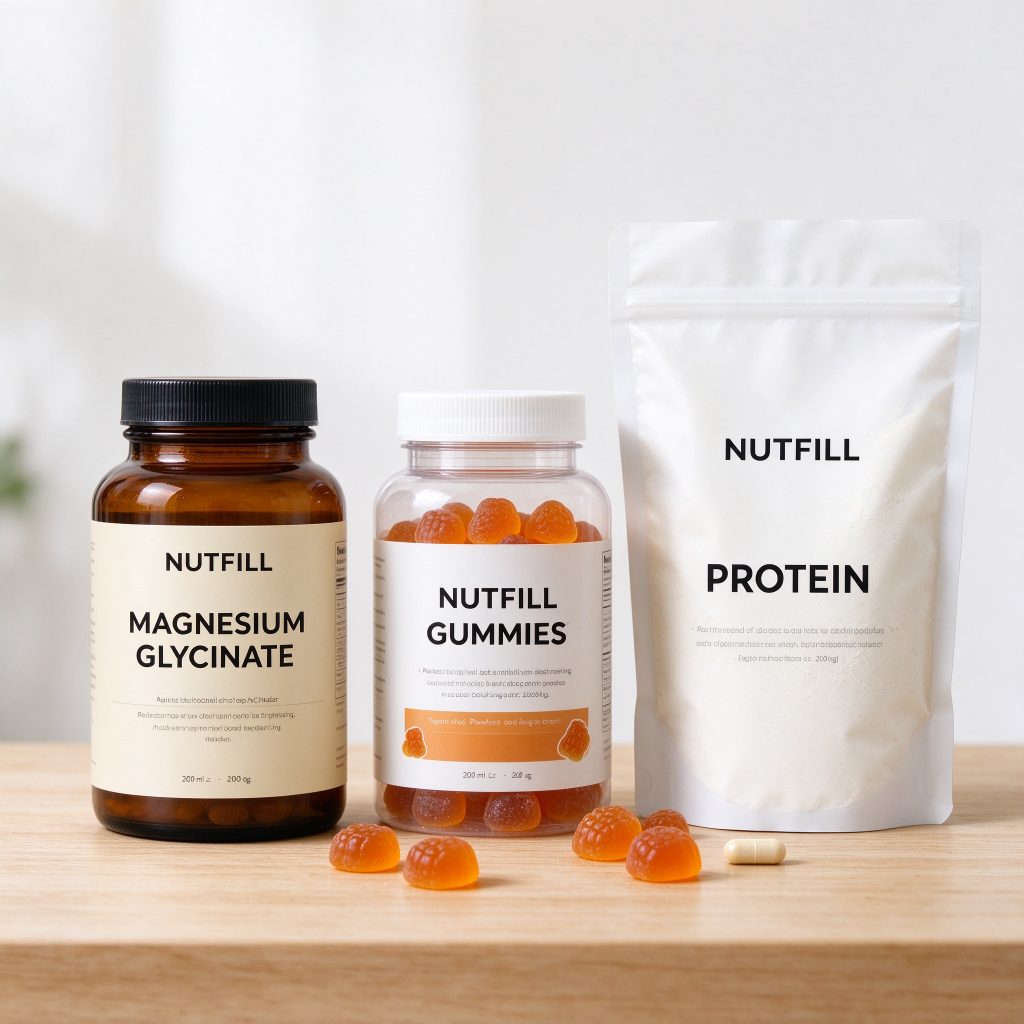
The supplement category is shifting shape. The pill bottle still anchors the industry, but the growth is happening elsewhere — in gummies that feel like a treat, powders that fit into a routine, and personalized formulas built around an individual’s biology. For a brand running a Shopify store, these shifts are catalog decisions: which formats get product pages, which SKUs anchor the storefront, and which formats buyers add to subscriptions. For white label supplement brands, the brands that read the direction early are the ones that own the next cycle. This guide maps where the supplement market is heading and what it means for Shopify sellers launching in 2026.
The Format Shift
Format is not decoration — it is the interface between the product and the buyer’s daily life. Buyers do not buy ingredients; they buy a habit that fits. On a Shopify store, format choice is a catalog and merchandising decision: each format gets its own product page, its own media gallery, and its own place in the navigation. That is why formats are where the category is reorganizing itself:
- Gummies. Gummies turned supplements from a chore into a ritual. They are easier to take, easier to share, and easier to integrate into a morning routine — and they have pulled a whole new demographic into the category. On a Shopify store, gummies often become the hero SKU: the entry product, the best-reviewed page, and the most common subscription signup. The trade-off is sugar and shelf life, which makes formulation and storage decisions more important.
- Powders. Powders are the format for people who already track their intake — blended into smoothies, coffee, or a water bottle. On a Shopify product page, they fit the optimization mindset: visible, measurable, customizable, and easy to bundle with complementary formats. The trade-off is scoop accuracy and mixing experience.
- Capsules and tablets. The classic format is still the workhorse for precision dosing and clinical credibility — the format regulators, and many skeptical buyers, take most seriously. Shopify sellers with an evidence-led position usually anchor the storefront with capsules and publish their testing documentation right on the product page.
- Liquids, shots, and functional beverages. Fast-absorbing, experience-driven formats that blur the line between supplement and beverage, winning younger buyers who want results in a single serving. On a Shopify storefront they often work best as bundle add-ons and subscription options rather than as the hero SKU.
The lesson is not that one format is dying. It is that format choice is a positioning decision: each format signals a different relationship with the product, and the buyer self-selects accordingly — which is exactly what Shopify analytics shows across your format pages.
Personalized Nutrition
The most consequential direction in the category is personalization. Instead of one formula for everyone, brands are building products around individual data — sleep patterns, activity, stress, and health markers — or around the specific jobs a buyer is trying to get done. On a Shopify store, personalization starts with a quiz app from the Shopify App Store: the buyer answers a short set of questions on the product page and is routed to the right variant, bundle, or subscription. The spectrum runs from simple (a quiz recommending among three proven variants) to sophisticated (custom formulas assembled per order).
Personalization matters for three reasons. First, it raises perceived value: a product built for “me” is harder to price-compare and easier to trust. Second, it creates switching costs: a personalized subscription is not interchangeable with a competitor’s bottle — once a buyer’s routine is wired to a variant, leaving means rebuilding it. Third, it changes the supply chain: instead of forecasting one SKU, the brand manages variant logic, smaller batches, and more SKUs in Shopify admin — which is exactly why formulation and fulfillment partners matter more, not less.
For white label brands, full custom formulation is one option, but personalization does not require a factory. A quiz that maps buyers to a small set of proven white label formulas delivers most of the perceived-value benefit with a fraction of the operational complexity. Shopify Bundles can then package the recommended variant with a complementary format, and Shopify Subscriptions or a third-party subscription app turns the personalized recommendation into recurring revenue. The brand that can say “this formula was selected for you” — on the product page, in the quiz result, and in the box — has already won the comparison game.
Format and Margin Economics
Format choice also shapes the margin story. Different formats carry different cost structures, and the right format depends on the brand’s target buyer and position:
| Format | Buyer profile | Margin potential | Best for |
|---|---|---|---|
| Gummies | Habit-driven, new entrants | Solid, protected by brand ritual | Broad consumer appeal |
| Powders | Optimization-minded, trackers | Solid, higher serving flexibility | Performance and wellness niches |
| Capsules/tablets | Clinical credibility seekers | Strong, precision dosing | Evidence-led positioning |
| Personalized variants | Data-driven, premium buyers | Premium, hardest to compare | Subscription-led brands |
Across formats, the private label model keeps gross margins in the 70–85% range — the format changes the cost base and the buyer, not the fundamental economics. Gummies may carry more formulation and storage care; powders more packaging weight; personalized variants more SKU complexity in Shopify admin. What stays constant is that a positioned brand with the right format can hold 70–85% margins, while a generic brand competes on price in whichever format it picks. On a Shopify store the difference shows up fast: format pages with a clear promise convert and reorder, while generic pages leak traffic to the competition.
What It Means for Brands
Three implications follow for supplement brands planning their next move:
- Choose the format that matches the promise. A sleep brand with a ritual message fits gummies or a nightly powder; a clinical trust play fits capsules with published testing on the product page. The format should be the proof of the position, not an afterthought — and your Shopify catalog should reflect that hierarchy, with one format anchoring the storefront.
- Plan for variant complexity early. If personalization is in the roadmap, build the supplier relationship, the SKU structure in Shopify admin, the quiz app, and the fulfillment workflow for variants now — retrofitting variant logic onto a single-SKU operation is expensive, and retrofitting it on a live subscription base is worse.
- Keep the evidence in every format. Gummies still need batch testing, powders still need traceability, personalized formulas still need documented sourcing. Publish it on the product page, collect verified-purchase reviews through your reviews app, and let the fulfillment partner protect expiry and temperature handling the same way regardless of format. The format changes the experience; the verification standard does not.
FAQ
Are gummies really where the growth is?
Gummies pulled a new demographic into supplements and remain a strong acquisition format for shoppers who want a pleasant daily ritual — and on a Shopify store they typically become the hero SKU and the most common subscription signup. But the direction of travel is broader: formats are multiplying because buyers want habits that fit their lives. The question is not “gummies or pills” but “what format fits my target buyer’s routine best.”
Does personalized nutrition require owning a factory?
No. Personalization is a product logic, not a manufacturing requirement. A white label brand can deliver most of the value with a quiz app from the Shopify App Store that maps buyers to a small set of proven formulas, or by tailoring dosing instructions and follow-up sequences per segment. Full custom formulation is an option at scale, but the perception of personalization — and its switching cost — is available to any brand running a Shopify store.
Which format should a new white label brand launch with?
Launch with the format that best matches your position and the buyer you can actually serve. If you are building a ritual brand for a broad audience, gummies give you reach on the Shopify storefront. If you are building an evidence-led brand for skeptical buyers, capsules support the credibility story. Pick one format, win it, then expand — format hopping dilutes the position, and a scattered Shopify catalog shows it first.
Do different formats change the compliance picture?
The standards are consistent: every format must meet cGMP manufacturing, labeling, and holding requirements, and buyers increasingly expect batch testing and traceability regardless of format. Gummies add formulation and storage considerations; powders add serving-accuracy questions; personalized variants add complexity in documentation and SKU tracking. The evidence bar rises with the complexity of the offer — it never goes away.
The supplement market is moving toward formats that fit daily life and products that feel personal. Gummies, powders, and personalized variants are not fads; they are the category adapting to how buyers actually live. For white label brands, the opportunity is to choose the format that proves the position, plan for variant complexity early, and hold the evidence standard constant — because the 70–85% margins of private label supplements belong to brands that match the format to the buyer, merchandised well on a Shopify store, not to the brand that follows every format at once.
