From First Order to Retention: Growth Tactics for Supplement Brands in 2026
Most supplement brands treat growth as a customer-acquisition problem. They run ads, chase new buyers, and watch churn quietly erase the gains. The brands that actually scale in 2026 treat growth as a retention problem first — and they run the whole retention engine on their Shopify store. They convert the first order into a second, the second into a subscription through Shopify Subscriptions or a subscription app, and the subscription into a relationship that Shopify analytics, customer segments, and email/SMS automation keep compounding. Because the economics of the category reward retention — private label supplement gross margins run 70–85%, and a retained subscriber earns that margin every cycle — the growth playbook starts where most brands stop looking: after the sale.
Why Retention Is the Growth Engine
The arithmetic is simple and unforgiving. Every new buyer costs acquisition money; every retained buyer pays it back with margin — and then keeps paying. In Shopify analytics, the brands winning watch customer lifetime value and repeat purchase rate by cohort rather than traffic alone, because the difference between a healthy subscription retention rate and a leaky one is not a marketing metric — it is the difference between a business that grows on ad spend and a business that grows on its own economics.
Three things make retention the highest-leverage lever in this category. First, supplements are consumable by design — the product is literally designed to run out, which makes every Shopify customer account a natural candidate for subscribe-and-save. Second, the trust dynamic is cumulative: each successful delivery and each honest answer strengthens the relationship, while each failure cancels years of goodwill. Third, retention feeds acquisition: a subscriber who refers a friend, leaves a review through your reviews app, and posts about the brand is an acquisition asset that costs nothing. The brands that win treat the first order as the beginning of a relationship, not the end of a transaction.
The Retention Stack
Retention is not one tactic; it is a stack of Shopify-powered systems that move the buyer from first order to renewal. Each layer removes a reason not to buy again:
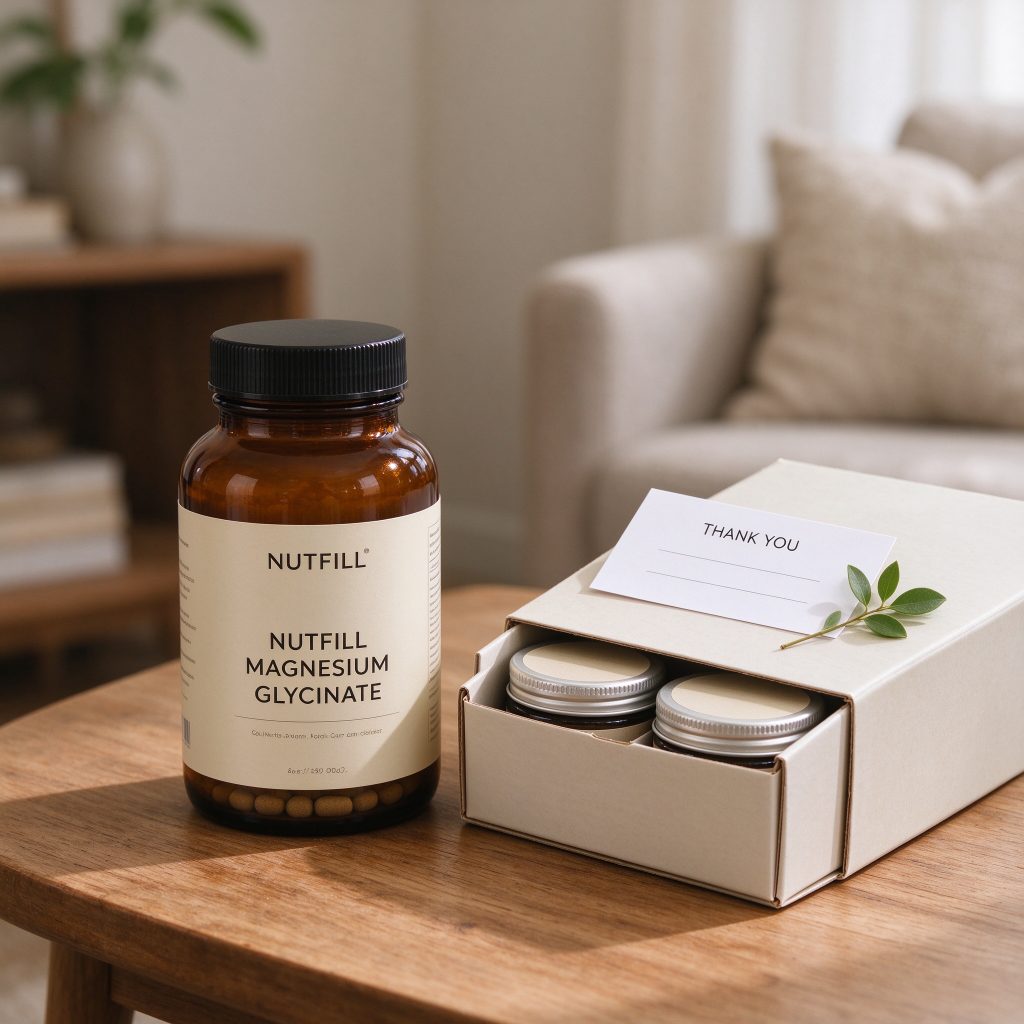
- The first-order experience. The unboxing, the batch number on the label, the delivery note, the on-time arrival — the first delivery either confirms the buyer’s decision or plants the first doubt. Orders flow from your Shopify store to the fulfillment partner automatically, so the box, the inserts, and the tracking email land exactly as designed.
- The education sequence. After the order, teach the buyer how the product works, when to expect results, and what good looks like. An email/SMS automation app connected to Shopify sends the sequence triggered by the order or by the subscription cycle — and the same content feeds the AI search answers that bring the next buyer.
- The value ladder. One product, one ritual, one outcome at first — then adjacent products for the same buyer’s related jobs, merchandised through Shopify Bundles and the storefront so the ladder grows order value without acquiring new customers.
- The subscription offer. The subscription is where retention becomes revenue: predictable cycles, clear value, easy pause or cancel, handled by Shopify Subscriptions or a third-party subscription app. The offer should be visible on the first product page, not buried after checkout.
- The feedback loop. Every cancel reason, support ticket, and negative review is data. In Shopify admin you can tag orders and build customer segments from churn signals; the brands that fix the reasons people leave convert the loop into retention improvements that compound.
The Growth Levers
Not every lever works at every stage. This map shows what moves the number — and when, measured in your Shopify data:
| Growth lever | What it does | When to use it |
|---|---|---|
| First-order experience | Confirms the decision and seeds the repeat; fulfillment tied to Shopify orders | Every order, always |
| Education sequence | Email/SMS automation builds belief and repeat traffic | From order one onward |
| Subscription conversion | Shopify Subscriptions turns margin into recurring revenue | From first product page |
| Reviews app | Social proof on product pages feeds discovery and trust | Every successful delivery |
| Referral program | Turns subscribers into acquisition | After retention is proven |
| Cross-sell ladder | Bundles grow order value per Shopify customer segment | After one product has traction |
The sequence matters. Referrals and cross-sells amplify a proven base; they do not create one. A brand that generates reviews and referrals before fixing the first-order experience is scaling the leak. The discipline is: prove the base at small scale, watch the cohort retention in Shopify analytics, then pull the levers that multiply it.
The Expansion Playbook
Retention eventually hits its ceiling on one product, and the next stage of growth is expansion — to adjacent jobs for the same buyer, identified from the customer segments in your Shopify admin. The playbook follows a consistent logic:
- Read the Shopify data. Which customer segment actually reorders? What second need do they mention in reviews and support tickets? Shopify analytics and customer segments show you the buyer you have, not the buyer you imagined.
- Add the adjacent product. The second SKU should solve a related job for the same person — the sleep brand adds the morning energy formula, the stress brand adds the recovery product. Same Shopify customer, bigger basket.
- Bundle it into the subscription. The expansion succeeds when it enters the subscription through Shopify Bundles or the subscription app, not when it launches as a separate one-off. Kits and laddered tiers convert the second product into recurring revenue.
- Hold the evidence bar. Every new SKU carries the same verification standard: batch testing, traceability, compliant labeling. The brand that expands without diluting its proof expands without diluting its trust.
FAQ
How do I know if my retention is good enough to scale?
Look at repeat purchase rate and subscription retention by cohort in Shopify analytics. If first-time buyers are not coming back, scaling acquisition multiplies the leak. Fix the first-order experience and the education sequence before you spend more on traffic — a brand that retains at a healthy rate can scale profitably; a brand that does not retain is buying churn.
What is the single most important thing for supplement retention?
The first-order experience. The delivery that arrives on time, in good condition, with correct labeling, batch information, and a note that feels personal confirms the buyer’s decision to trust you. Every retention tactic downstream is multiplied by this moment — and every fulfillment failure cancels marketing you have already paid for. Because orders flow from your Shopify store to the fulfillment partner automatically, the first delivery is only as reliable as that integration.
How should a supplement brand structure its subscription offer?
Make it simple and honest: a clear cycle, a visible saving, and easy pause or cancel through Shopify Subscriptions or your chosen subscription app. The subscription should be a better version of the same product — not a trap. The brands with the healthiest retention offer flexibility, deliver reliably, and let the relationship, not the lock-in, do the retaining.
When should I launch a second product?
After one product has proven repeat demand in Shopify analytics and you understand which customer segment is actually buying. Launch the adjacent product for the same buyer, bundle it into the subscription, and hold the evidence bar. Expanding before the base is proven dilutes the position; expanding with data compounds it.
The brands that scale supplements in 2026 grow from the first order forward, and they run the whole engine on Shopify. Win the first delivery, teach the buyer with email/SMS automation, convert the subscription, fix every reason to leave using customer segments and analytics, and expand into the jobs your buyers already have. The 70–85% margins of private label supplements are the reward for the relationship — the brands that retain are the brands that compound.
