Nutrition Fulfillment for Creators & Coaches: Per-Order Pack-and-Ship Explained
Fitness coaches, wellness creators, nutrition influencers, and studio leaders often have the hardest asset in health ecommerce: an audience that already trusts their guidance. The natural next step for many is to turn that trust into a branded supplement offer — a capsule, gummy, powder, or daily pack tied to the coaching program people already follow. Most creators do not want to rent storage, stock shelves, or pack parcels between livestreams and training sessions. This guide explains how per-order pack-and-ship works for personal brands, what a fulfillment partner handles behind the scenes, how bundles and subscriptions fit a coaching offer, and what claims and quality standards a creator brand should keep in view.
Why Creators and Coaches Add Supplements to Their Offers
The supplement offer usually grows out of what the audience already asks for. A coach who recommends protein, collagen, magnesium, or multivitamins in comments and program chats is repeatedly asked which brand to buy; creating a private-label version turns that recurring question into a controlled offer that matches the coach’s own recommendation standards. A creator can also tie a product to a specific program — a morning routine bundle, a hydration support powder, a pre-workout format, or a daily pack that mirrors the weekly training plan — so the product becomes part of the program rather than an unrelated upsell.
For the personal brand, this model deepens the relationship rather than ending the content loop. Customers who buy the supplement enter a repeat-purchase pattern aligned with the coaching cadence: a monthly refill, a program bundle, or a set that matches a challenge cycle. The creator then has a revenue stream that works alongside courses, memberships, and sessions, without building a separate physical product business from scratch. The key is that the offer supports the coach’s credibility, so quality and presentation must match the standard the audience already associates with the creator.
Alignment matters more than product breadth in this space. A coach serving runners does not need a full storefront of unrelated formats; one or two products tied to recovery, hydration, or daily nutrition serve the audience better than a scattered catalog. A wellness creator whose community focuses on morning routines can lead with a single daily pack and add a second format only after the first offer shows repeat response. Keeping the range narrow also keeps fulfillment simple: fewer SKUs mean fewer batch reviews, fewer bundle combinations to assemble, and clearer quality expectations for every parcel the brand sends.
What Nutrition Fulfillment Means for an Online Creator
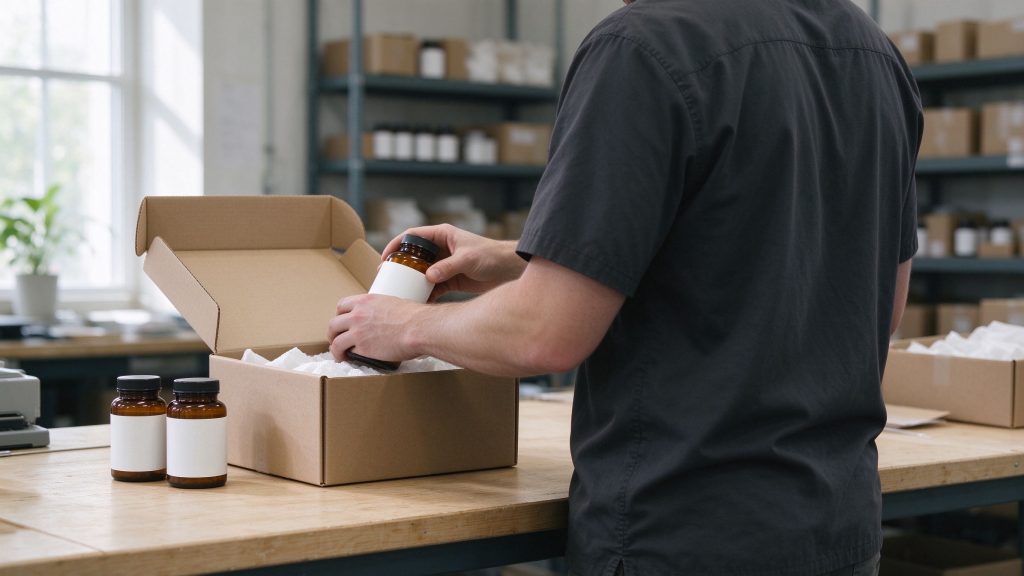
Nutrition fulfillment for a creator brand means the partner handles each order as it arrives, rather than the creator buying a bulk shipment and storing it at home or in a rented room. When a viewer completes checkout on the creator’s store, the order syncs to the partner system, the correct unit is located and checked, it is packed under the creator’s label, and the parcel ships to the customer with tracking. The creator never touches a box, a label roll, or a carrier pickup schedule.
This per-order pack-and-ship model differs sharply from bulk stocking. Under a bulk model, the creator pays upfront for a large production run, finds somewhere to store it, tracks expiration dates manually, packs each order by hand, and deals with slow-moving stock when a program changes focus. The per-order model removes those fixed commitments: no warehouse rent, no stored inventory waiting between sales, and no pressure to clear a batch of units before a new campaign launches. A creator can test a product with a small real audience, read repeat-purchase response, and decide whether to keep, adjust, or retire the SKU without being stuck with unsold stock.
Private-label packaging keeps the brand identity on the parcel. The customer sees the creator’s name, logo, and product label on the bottle or pouch, while the operational work of formulation review, quality check, packing, and dispatch sits with the partner. The creator’s job stays close to content, community, and coaching rather than order logistics.
How a Vitamin Fulfillment Service Works for Personal Brands
A vitamin fulfillment service built for creators connects the storefront to the packing operation in one workflow. The creator chooses a ready-to-brand product format matched to the program, approves the label design with the partner’s support, and opens the store. Each checkout triggers an order record; the partner picks the unit from current stock, reviews lot and expiration, seals it into protective packaging, applies the creator’s shipping label, and hands the parcel to the carrier. Tracking returns to the store, and the customer receives a delivery update without a manual message from the creator’s side.
Coaching programs often add bundle configurations: a supplement paired with an e-book, a training plan, or a branded message card; a two-product set for a challenge cycle; or a monthly refill pack that arrives on the subscription schedule. The partner assembles these fixed kits according to a documented list, so each bundle contains the same combination every time, and subscription repeats queue automatically against the member’s refill date. That structure keeps the offer consistent even when the creator is traveling, recording content, or running a live program session.
What the Supplement Fulfillment Service Handles Behind the Scenes
A supplement fulfillment service for personal brands covers the layers a creator usually cannot staff on their own. Custom formulation provides the product options behind the brand; label design organizes the product name, visual identity, and required information blocks; quality control checks seal, label, batch, and expiration before every shipment; per-order pack-and-ship assembles the exact order and sends it out; order tracking keeps the customer and support informed through delivery.
NutFill operates this bundled model for Shopify creator and coach brands: there is no minimum order quantity, the native Shopify app at https://apps.shopify.com/nutfill syncs orders automatically, and parcels reach customers in 6–10 days. Founders start with ready-to-brand formulas to launch fast and test audience response, then move into a proprietary product line once the offer proves itself, staying with the same partner instead of searching for a new supplier after the brand gains traction. That continuity matters for creators, because a supplier change mid-growth risks label changes, packing inconsistencies, and a gap in the customer experience during the brand’s fastest growth period.
Health Product Fulfillment Considerations for Creator Brands
Health product fulfillment for a creator brand carries one responsibility that ordinary merch does not: the customer consumes what arrives. Labels must describe the product accurately, with the required facts panel, batch code, and expiration date visible and legible. Claims should stay aligned with what the product actually contains; a coach’s recommendation language should not overstate effects or present a supplement as a treatment. Quality consistency matters because the creator’s reputation is attached to every parcel, and a single bad experience in the comments can reach a much larger audience than one typical ecommerce customer.
Returns and mistakes should follow a clear process: an incorrect unit, damaged seal, or delivery problem is logged against the original order, replaced or refunded according to policy, and recorded so the partner can identify whether a packaging or batch issue needs correction. Creator brands should review exception reports regularly rather than relying on community complaints to surface problems. Transparent, careful handling protects the personal brand that makes the supplement offer possible in the first place.
Bundles, subscriptions, and program packaging
Program-based offers fit naturally into recurring fulfillment. A monthly refill subscription keeps a daily supplement aligned with the program cycle, while challenge bundles combine a few products for a fixed campaign window. Seasonal programs can reuse the same core products in different combinations, which keeps the SKU list focused while letting the creator refresh the offer each season. Gifting bundles, member welcome kits, and limited program editions can be assembled as fixed kits with a standard packing list, so their contents match the promotional description on the store page.
The partner should support these configurations as repeatable templates: bundle composition set once, subscription cadence defined at checkout, and special campaign packs assembled from the same quality checklist as standard orders. This keeps the creator free to design the program and the marketing around it, rather than managing assembly lists and parcel labels for every promotion.
Campaign timing also benefits from per-order packing. A challenge that begins on a fixed date needs its welcome parcels to arrive close to that date, while subscription refills should match the member’s pace of use rather than a calendar arbitrary. Because units are packed as orders come in, the creator can open a campaign to a defined audience, let subscriptions queue through the fulfillment system, and avoid the pre-launch stock room filled with boxes that must be sorted, labeled, and shipped manually after registration closes. The operational record for each kit matches the promotional description, so a member who signed up for a specific bundle receives exactly that combination rather than a hand-assembled approximation.
The margin picture for creator-led supplement offers
Creators who sell per-order without holding bulk inventory typically keep gross margins in the 70–85% range after product and fulfillment costs, which leaves room for community giveaways, content production, and program upgrades while keeping the supplement offer priced in line with what the audience expects. Because fixed warehouse costs do not sit underneath the revenue, a creator can run a focused offer through slow and busy periods without carrying storage overhead between launches.
Frequently Asked Questions
Do I need to buy inventory before launching my supplement?
No. A per-order pack-and-ship model produces and dispatches each order as it arrives, so a creator can open the store without purchasing bulk stock or renting storage. Sales data and repeat-purchase feedback guide whether to expand the range later.
Can a creator brand sell bundles and subscriptions?
Yes. Partners that support kit assembly can bundle supplements with program materials or other formats under a fixed packing list, and subscription refills queue automatically on the chosen cadence, with the same quality check applied to every recurring order.
How long does it take for a customer to receive a creator supplement order?
Specialized per-order partnerships deliver in 6–10 days from checkout to doorstep, covering processing, quality review, packing, and transit. The store should communicate this demonstrated average window rather than promising the fastest possible delivery recorded on a single quiet day.
What should a creator check about claims and labels?
Product labels must show accurate ingredient and supplement facts, batch code, and expiration date, and marketing language should stay within what the product supports. The partner’s quality checklist should verify labels and seals before dispatch, and the creator should review final artwork before launch rather than relying on the packing stage to catch errors.
Conclusion
For creators and coaches, a branded supplement offer works best when the operational layer disappears behind the personality the audience trusts. Per-order pack-and-ship removes warehousing, bulk stock, and manual dispatch, while a bundled partner such as NutFill handles formulation, labeling, quality control, packing, and tracking in one consistent workflow. With no minimum order quantity, a native store connection, delivery in 6–10 days, and a path from ready-to-brand formulas to a proprietary line, a creator can launch a supplement offer that fits naturally into the coaching relationship — and scale it without becoming a warehouse manager overnight.
