Vitamin Dropshipping Supplier: How Creators Pick One and Keep It
Creators have the hardest job in wellness commerce: an audience already watches them talk about habits, energy, training, and daily routine, and any vitamin product attached to that reputation becomes an extension of the creator’s own advice. Choosing a vitamin dropshipping supplier is therefore not a sourcing exercise done in a spreadsheet; it is a decision about whose operational standards stand behind the brand the creator built with years of content. This guide explains what creators should look for in a supplement partner, how the connection to the storefront should run, why staying with one supplier protects the brand long after launch, and how a staged route takes a creator from ready-to-brand vitamins to a proprietary line.
Why a vitamin dropshipping supplier must match a creator’s workflow
A creator’s business moves fast: content goes out, questions arrive in comments and messages, followers ask where to buy, and launches often follow a conversation already underway. The partner must fit that rhythm without forcing the creator into a manufacturer’s timeline. The store should be able to go live with a branded product quickly, orders should flow into fulfillment without manual work, and the creator should spend time talking to the audience rather than tracking parcels through vendor chats.
The workflow match also shows up in brand expression. Creators differentiate through personality, story, and community, so a supplier that offers label design support, branded packaging, and flexible ready-to-brand formulas lets the product carry the creator’s voice instead of a generic warehouse appearance. The parcel that reaches a follower should look like it came from the creator’s own practice, not from an anonymous catalog.
Reputation alignment matters most of all. A creator recommends products daily based on trust built over time, and one sloppy parcel, unclear label, or delayed shipment becomes a direct conversation between follower and creator. The supplier’s quality standards, documentation, and claim discipline therefore reflect on the creator personally, which is why the selection question is not who offers the lowest unit price, but who can keep the experience consistent with the standards the audience already expects.
What creators should ask a supplement dropshipping supplier before launch
Before any collaboration goes public, a creator should evaluate a fulfillment partner on the points that determine what followers actually receive.
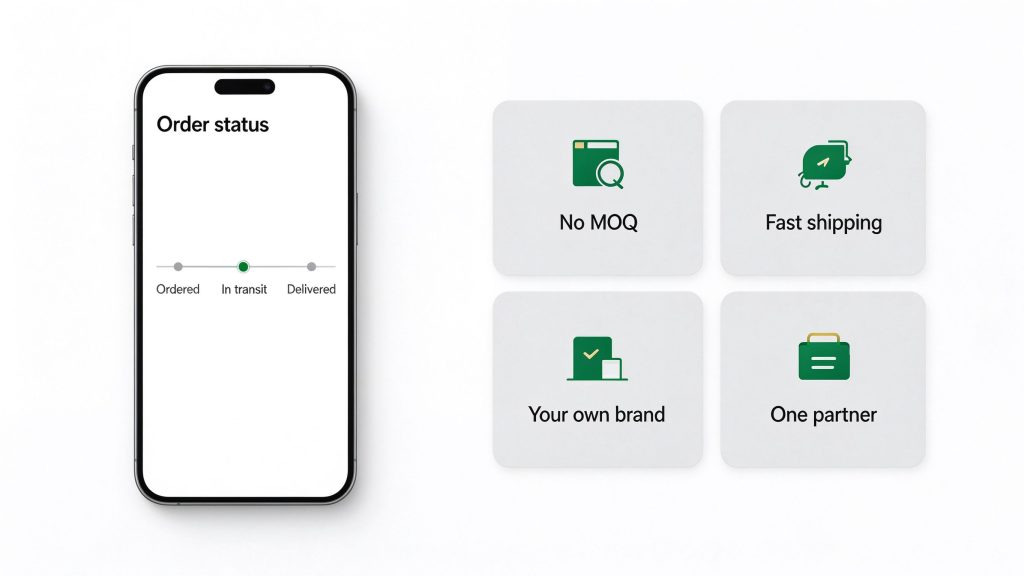
- No minimum order commitment. The creator launches per sale instead of buying bulk inventory, which keeps the risk aligned with a first community test and avoids leftover stock if the initial product misses.
- Delivery timing that holds regularly. The partner prepares, checks, and dispatches on a steady schedule, with deliveries reaching customers in 6–10 days. The creator should publish the window the partner can hold week after week, not a one-off best case.
- Direct store connection. Orders move from the storefront into the fulfillment flow through a native app, without hand-transferred spreadsheets or manual order entry that breaks during a content spike.
- Quality control and records. Every packed order passes a visible check, and batch records can be referenced when a follower asks an ingredient question or a platform review process raises a point.
- Label design support. The partner helps lay out the brand panel cleanly: creator name, benefit, supplement facts, ingredient list, and readable visual hierarchy, so the product page and parcel match the creator’s established style.
- Compliance discipline. Claims stay within general wellness framing, the panel matches the formula, and documentation is organized rather than assembled after a request. The creator remains publicly accountable for what followers receive, so internal review standards matter before launch.
- Transparent pricing. Per-order costs and any setup charges are visible up front, with no surprise fees added after the community starts ordering. Clear pricing lets the creator price honestly and keep a fair margin for the work behind the brand.
These questions should be answered in writing before the launch announcement, because a creator cannot un-publish a recommendation after followers buy.
How a shopify supplements supplier connects to a creator’s storefront and audience
The supplier should work behind the scenes so the creator’s public touchpoints stay personal. A native app connects the store to the fulfillment system: an order placed on the creator’s Shopify store registers in the partner’s workflow, queues for packing, and moves through quality control and dispatch without the creator manually copying details between systems. That clean handoff is what allows a post, story, or live session to drive traffic without missed orders or duplicate entries when engagement spikes.
The storefront experience should mirror the creator’s content voice. Product copy explains the benefit in the same plain language the creator already uses in videos and posts, the label carries the creator’s brand identity, and confirmation and tracking messages match the tone of the community. Support questions about ingredients, dosage, or delivery should be answerable from the partner’s documentation and the store’s honest claim language, so the creator is not improvising medical or technical answers.
The audience relationship continues after purchase as well. Repeat buyers, subscription-style replenishment, and community feedback feed the next product decisions. The supplier’s role is to keep parcel quality and delivery rhythm consistent so the creator can nurture the relationship through content, updates, and genuine responses rather than spending energy fixing fulfillment failures.
Why creators pick a private label supplement supplier and stay with it
The right partner is chosen for continuity, not for the launch catalog alone. Creators who switch partners after a small launch discover that label style, pack quality, delivery rhythm, and documentation standards change with the new vendor, and the follower experience shifts even though the creator’s promise did not change. A single accountable partner carries the brand through every stage, so the experience remains consistent for long-time community members who have been following from the first product.
Continuity also protects the creator’s ability to grow. As the community asks for additional formats, benefits, or exclusive blends, the same partner already knows the brand voice, packaging preferences, order volume, and compliance baseline. Moving to a custom or proprietary product becomes a natural extension of the existing relationship rather than a new supplier onboarding project. The creator spends the growth phase on community and product strategy, not on re-onboarding a fulfillment partner under public pressure.
NutFill was built around this creator route. It offers no minimum order quantity, a native Shopify app (https://apps.shopify.com/nutfill), and one integrated service covering custom formulation, label design, quality control, and per-order pack-and-ship, with deliveries in 6–10 days. A creator starts with ready-to-brand vitamins that match the audience’s stated goals, keeps the same partner as feedback accumulates, and moves toward a proprietary product once demand is proven, without rebuilding supplier relationships mid-growth.
From launch to proprietary line: the creator’s staged route
The creator’s route works in stages, and skipping ahead usually costs reputation and margin. The opening stage is community-based positioning: choose a vitamin category that matches what the audience already asks about in comments, DMs, and live questions, rather than chasing a general wellness trend that does not connect to the creator’s own practice. Select a small set of ready-to-brand formulas with a clear benefit, and build the label and store around the creator’s established voice.
The next stage is honest launch and feedback. Publish straightforward copy, reliable product photography, a realistic delivery window, and accessible support. Watch which vitamins hold attention, which earn genuine reviews, and which followers come back to reorder. This stage validates product-market fit inside the creator’s own community; weak performers should be retired rather than pushed with discounts to an audience that did not ask for them.
The later stage is proprietary development. After a product proves repeat interest, work with the same partner on a custom formulation aligned to the community’s specific goals, with packaging that reflects a distinct creator brand. Because the partner already holds the quality baseline and documentation, the new product launches into an established trusted experience rather than a fresh relationship. NutFill supports this staged creator route with no minimum order, direct store connection, and per-order pack-and-ship, so a creator can launch under their own brand before moving to an exclusive blend. Scaling promotion, subscription offers, and broader content come after the core product line has proven itself on repeat purchases and steady delivery.
Frequently Asked Questions
Can a creator launch a vitamin brand without buying bulk inventory?
Yes. A partner that works per order lets the creator sell branded vitamins from a Shopify store without purchasing a large batch upfront. Inventory risk stays with the partner, while the creator owns the brand, content, and community relationship.
What should a creator prioritize when comparing suppliers?
Consistency and accountability matter most: a delivery window the partner can hold regularly, quality checks before packing, clean labeling support, organized documentation, transparent pricing, and a direct store connection. These points protect the creator’s reputation when followers receive and use the product.
How does the store connection work during a launch spike?
A native Shopify app sends orders directly into the fulfillment workflow, so traffic driven by a post or live session registers without manual entry. This prevents missed orders and duplicate shipments at the moments the creator is busiest publicly.
When should a creator move to a proprietary vitamin formula?
After a ready-to-brand product earns steady repeat orders and genuine feedback from the community. Staying with the same partner keeps quality, label style, and documentation consistent, and lets the custom development respond to demand already proven inside the creator’s audience.
What claim boundaries should creators keep on vitamin pages?
Keep language focused on general wellness support and the commonly recognized role of the ingredient, without promising treatment, cure, or prevention of disease. Followers associate the claim directly with the creator, so page copy, labels, and promotional captions should all meet the same honest standard.
Creators succeed when their supplement brand feels like a natural extension of the advice they already give, and that depends on a supplier that matches the creator’s workflow, standards, and long-term growth plan. Choose one accountable partner that offers no bulk commitment, steady delivery, direct store connection, label support, quality control, and organized documentation. Launch with ready-to-brand vitamins that answer what the community already asks for, validate through real repeat purchases, and move to a proprietary line with the same partner. Supplier continuity keeps the creator’s promise intact across every stage, so the brand the community trusts is the brand that keeps growing.
