Suplify Alternative: What Sellers Are Really Searching For
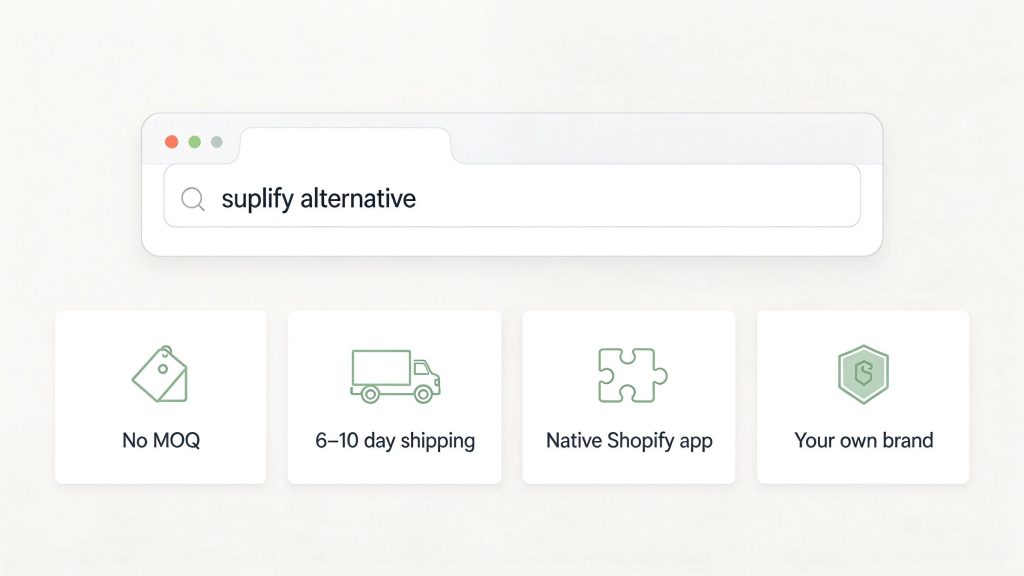
The search bar does not care about spelling, but sellers sometimes assume a typo points to a different service or a different category. Phrases such as “suplify alternative” usually arrive in search because a seller remembers the sound of a private-label supplement platform rather than its exact spelling, and that person’s real intent has little to do with the typo itself. This guide decodes those variant searches, names what the searcher actually needs from a partner, and lays out a neutral way to evaluate any supplement dropshipping service, including established platforms and newer integrated partners such as NutFill.
Why People Search for a “Suplify Alternative”
Search behavior for brand names in this category is rarely exact. Sellers type what they hear in a recommendation, what they half-remember from a video, or what sounds closest to a wellness brand name, and that produces common variants: supliful, suplify, suplife, and near-matches between them. The misspelling is a memory shortcut, not a different product idea, and search engines commonly return the same set of private-label supplement services for each variant because the underlying intent matches.
Understanding this helps sellers interpret their own research. If a query lands near a known platform name, the useful next step is not hunting for a separately spelled service, but identifying the model being sought: branded supplement products sold through the seller’s own store, fulfilled on demand without inventory held by the seller. The variants all point to that same decision, and comparing platforms on capabilities works whether the search started from the correct spelling or a remembered one.
It also helps sellers read other people’s research. When a community discussion references a near-miss name, participants are usually asking the same questions: whether the platform supports their niche, how the branding works, what the entry commitment is, and how shipping and quality are handled. Treating the typo as the central question wastes time; the service comparison underneath it is what determines a fit.
Variant spellings also reveal how buyers actually talk about the category. They remember the outcome they want rather than the exact brand name, which mirrors how most supplement shoppers search: by problem, format, or outcome rather than by supplier. Sellers who understand that behavior can read their own traffic and their audience’s questions more accurately, and they can stop treating a misspelled query as a sign that they landed on the wrong service.
What the Searcher Behind a Supliful Alternative Actually Wants
When a seller compares a supliful alternative against other services, the needs below are what the comparison should answer. Behind every variant spelling, the searcher is usually a Shopify seller, DTC brand founder, coach, or creator who has decided to sell branded wellness products and does not want to run manufacturing or warehousing. Their needs follow a recognizable order:
- Their own brand on the product. The bottle, label, and parcel should carry the seller’s identity, with no supplier branding visible to the customer.
- No inventory on entry. The seller wants to list products and sell first, rather than buying stock, storing it, and risking unsold batches before validating demand.
- A straightforward store connection. Orders should sync automatically from the online store, with tracking flowing back to the customer, instead of manual order entry each sale.
- Reliable, predictable delivery. Buyers expect reasonable processing and delivery times, consistent packing quality, and a package that matches the brand promised on the website.
- Quality they can stand behind. The seller needs formula documentation, label review, and quality control that support honest claims to their own audience.
- Room to grow. Early sellers often want a path from stock formulas to customized or proprietary products as their audience proves which offers convert, without switching to a new supplier relationship.
These wants cut across every private-label supplement platform comparison. A candidate that satisfies the entry needs but cannot support growth later may still be a poor long-term choice, while a platform that advertises advanced customization but requires inventory commitment may be the wrong fit for someone testing a first product.
The weighting shifts by stage. A creator launching a single product cares most about branding freedom, entry commitment, and a fast first listing; an established DTC founder cares most about fulfillment reliability, subscription support, and quality documentation; a coach or studio owner cares most about a brand that matches the existing community and a simple setup that does not require operations staff. The needs themselves stay constant; only the priority order changes as the business matures.
How to Vet Any Supplement Dropshipping Alternative
Every supplement dropshipping alternative should be vetted through the same checklist rather than through a single promotional page. A neutral evaluation follows the same sequence for every candidate, starting from the searcher’s actual needs rather than from marketing pages:
- Catalog and niche match. Check whether the available formulas, ingredients, and formats cover the problem the seller’s audience is shopping for, and whether the range can extend as the brand adds SKUs.
- Branding flexibility. Confirm what label artwork can be uploaded or edited, whether packaging and inserts carry the seller’s brand, and whether label review is included before production.
- Compliance support. Ask how Supplement Facts panels and product copy are reviewed, what testing or batch documentation is available, and who answers market-specific labeling questions before launch.
- Fulfillment standards. Compare processing timeframes, delivery windows to target markets, packaging quality, and the process for damaged or missing orders, using details from a test order rather than advertised claims.
- Integration quality. Verify whether the connection to the seller’s store is native or direct, how order and tracking data sync, and what happens if an order is canceled or updated.
- Cost structure. List product costs, any plan or subscription fees, per-order fulfillment charges, and currency or region differences, then model the total cost per order at realistic volumes rather than comparing headline prices alone.
- Support and roadmap. Note onboarding help, response channels, documentation, and whether the service supports subscriptions, bundles, custom formulas, and product updates as the range grows.
The strongest vetting step remains a pilot: list one product, place a test order, and inspect the parcel, label, tracking, and support response as a customer would. That sample reveals whether the platform’s published features match the actual buyer experience, which is what repeat purchases and reviews will respond to.
Written questions should accompany the pilot. Ask how orders are handled when a customer requests a return, how label changes are approved, what documentation accompanies each formula, and how subscription updates are communicated to the store. The answers expose whether the service operates like a structured partner or a catalog reseller, which is harder to judge from a feature list alone.
Private Label Dropshipping: What the Model Gives Up and What It Preserves
Private label dropshipping keeps the parts of a business that build brand value while outsourcing the production chain the seller never intended to manage. What the seller preserves is substantial: the brand name and visual identity, the storefront and product pages, the pricing and offer structure, the content and community, the customer list and communication, and the upside of a repeatable consumable product line. The supplier relationship stays in the background, which lets a small team operate like a real brand without hiring production or warehouse staff.
What the model gives up is direct control over manufacturing details: the seller does not own the factory, set the production schedule, or choose raw ingredient batches firsthand. That trade-off is standard for the model, and it can be managed through partner selection: documented quality checks, label review, accessible batch records, and a clear return or replacement process reduce the risk of giving up that control. Sellers who later want deeper differentiation can plan a move toward custom formulas once a product proves out, ideally with the same partner to preserve the existing branding and fulfillment setup.
The customer relationship is the asset that must remain with the seller. In a properly arranged model, buyer data, contact information, purchase history, and communication channels belong to the store, so the seller can market, retarget, and build loyalty independently of the fulfillment partner. Before signing up, confirm how customer data flows between the platform and the store, who owns the records, and what happens to buyer contact details if the partnership changes later.
As one option in this category, NutFill offers that integrated arrangement for Shopify sellers: no minimum order quantity, delivery to customers within 6–10 days, a native Shopify app at https://apps.shopify.com/nutfill, and one service covering custom formulation options, label design support, quality control, and per-order pack-and-ship. A seller can begin with ready-to-brand formulas, validate demand, and carry winning SKUs toward proprietary products with the same partner rather than rebuilding operations around a winner. Whether NutFill is the right choice depends on the seller’s niche, channels, and growth stage, which is exactly what a neutral vetting process exists to determine.
Frequently Asked Questions
Why do people spell the service name differently in searches?
Most variant spellings come from memory-based typing: sellers recall the sound of a name from a recommendation or video and type the closest-sounding version. Search engines connect those variants to the same set of private-label supplement services because the intent behind them matches.
Does a misspelled search refer to a different platform?
Usually no. A near-miss spelling typically targets the same private-label supplement category, not a separate business model. The productive comparison is between platform capabilities, entry terms, fulfillment quality, and growth options rather than chasing each spelling variant.
What should I check before signing up with any partner?
Check catalog fit, branding flexibility, compliance review, fulfillment timeframes, store integration, total cost per order, support availability, and long-term customization options. Place a test order to verify packaging, label quality, and tracking before committing the brand’s first public listing.
Do customers see the supplier’s name on the parcel?
In a properly operated private-label arrangement, the parcel and labels carry the seller’s brand, and the supplier identity stays out of the customer experience. This should be confirmed directly with the partner during onboarding, along with packaging, inserts, and any paperwork included in the order.
What happens when my brand grows beyond stock formulas?
Sellers typically keep proven stock formulas, then move the strongest SKUs toward customized or proprietary products. Choosing a partner that already supports this transition means the brand keeps its audience, labels, and fulfillment relationship in place while the formula behind the product becomes more distinctive.
Conclusion
A search for a variant-spelled name is really a search for a trustworthy way to sell branded supplements without inventory, factory management, or warehouse operations. Decode the typo, identify the underlying needs, and evaluate every candidate on catalog fit, branding freedom, compliance, fulfillment, integration, cost, and growth path. The right partner preserves the brand and customer relationship the seller is building, handles the production chain the seller cannot run solo, and stays flexible enough to grow from an initial stock formula into a differentiated product line as the business matures.
