Shopify Nutrition Supplier: Why Niche Stores Outrank General Supplement Shops
Every new supplement founder faces the same temptation at the start: list everything. Sleep gummies, gut powders, protein, multivitamins, brain boosters — the full shelf from the catalog. It feels safer to cast a wide net. In practice, the generalist supplement store is almost always the slowest one to rank, the hardest one to advertise, and the least likely to build repeat customers. The Shopify nutrition supplier relationship that actually wins in 2026 is the one paired with a sharply defined niche. This post explains why specializing beats generalizing, which niches work, and how to pick yours without boxing yourself in.
Why the Generalist Store Loses
A store that sells “everything for everyone” looks like a great idea on day one. On day 100, it is a content and ad machine that never quite gets traction. The reason is structural, not motivational.
Google Does Not Trust Generalist Health Sites
Search engines reward topical authority. A store that publishes 40 posts on women’s midlife hormone support will outrank a store that publishes 40 posts on 40 different supplement topics, even if the generalist site has more backlinks. Google looks for depth signals: how many pages you have on a subject, how internal links cluster, whether your product range matches your content. A generalist store sends mixed signals — today you’re an expert on sleep, tomorrow on joint pain, next week on gym recovery. The algorithm cannot decide what you are, so it ranks you for nothing.
Ads Cannot Target “Everyone”
Meta and Google Ads buy attention by audience. A “multivitamin for adults” campaign has to target a broad swath of 25–65-year-olds, which means high CPMs, low click-through, and weak conversion. A “probiotic for perimenopause bloating” campaign can target women 42–55 who follow specific wellness accounts, read specific publications, and have shown interest in hormone health. The CPM drops, the click-through rises, and the cost per acquisition falls. The niche store spends less to make more.
Customers Do Not Trust Generalist Health Brands
People buy supplements to solve a specific problem they feel in their body. When they land on a store that sells protein powder, sleep gummies, and a libido booster side by side, the subconscious read is “this is a reseller, not an expert.” When they land on a store that only sells products for perimenopause, the read is “these people understand my body.” That trust gap is worth a 70–85% margin on every order, because it is the difference between a one-off purchase and a 6-month subscription.
The Niche Advantage in Numbers
| Dimension | Generalist Supplement Store | Niche Supplement Store |
|---|---|---|
| SEO topical authority | Scattered, hard to rank | Deep cluster, ranks fast |
| Ad CPM relative | High (broad audience) | 30–50% lower (precise audience) |
| Email open rates | 15–20% typical | 30–45% with a tight niche |
| Subscription attach rate | Low (one-and-done basket) | High (ongoing need) |
| Content production | Reinvent every post | Same audience, deeper angle each time |
| Supplier fit | Spread across many SKUs, weak relationships | Deep catalog in one area, easier QC |
Niches That Actually Work in 2026
Not every niche is a good business. The best niches share three traits: a defined audience with a painful, ongoing problem; products that need repeat purchase; and enough search volume to build an audience without requiring millions in ad spend. Here are the ones worth looking at:
Sleep and Circadian Support
Insomnia is a mass-market problem with a premium willingness to pay. The audience is broad enough to scale but specific enough to target. Products include magnesium glycinate, L-theanine, melatonin alternatives, and adaptogen blends. The content angle is sleep hygiene, evening routines, and travel jet lag.
Gut Health and Bloating
Probiotics, prebiotics, digestive enzymes, and fiber blends. The audience is large, the repeat purchase cycle is monthly, and the content angles are endless — IBS, post-meal bloating, travel digestion, gut-skin axis. Strong niche sub-segments include women’s gut health and post-antibiotic recovery.
Women’s Midlife Hormone Support
Perimenopause and menopause are among the fastest-growing supplement categories. The audience is underserved by legacy brands, highly engaged on social media, and willing to subscribe long-term. Products include evening primrose, maca, ashwagandha, and targeted multivitamins. This niche rewards brands that speak to the customer, not at her.
Sports Nutrition and Recovery
Beyond the generic protein powder: targeted creatine for women, electrolyte powders for runners, joint support for lifters, and sleep-recovery stacks for athletes. The audience is easy to reach through fitness creators, and the purchase cycle is habitual.
Cognitive and Stress Support
Nootropics, adaptogens, and adrenal support for high-stress professionals and parents. The audience skews slightly older, higher income, and comfortable with subscriptions. The content angle is burnout, focus, and work-life balance rather than “brain hacking.”
How to Pick Your Niche Without Painting Yourself Into a Corner
The fear that stops founders from choosing a niche is “what if I get bored of it, or it stops growing?” That fear is reasonable but overblown. A niche is a starting position, not a permanent cage. The trick is to choose a niche that lets you expand laterally without diluting the brand. Most winning supplement brands started with one tightly defined audience and grew outward by adding products that same audience already needed. They did not start with a catalog and try to find customers for it.
- Start with the audience, not the product. “Perimenopausal women” is an audience. “Gummy vitamins” is a product. Build around the audience, and you can add products as their needs evolve.
- Pick a niche where you can publish 50 posts. If you can’t imagine 50 article ideas on day one, the niche is too narrow. If you can’t imagine 50 because you don’t care about the audience, the niche is too cold.
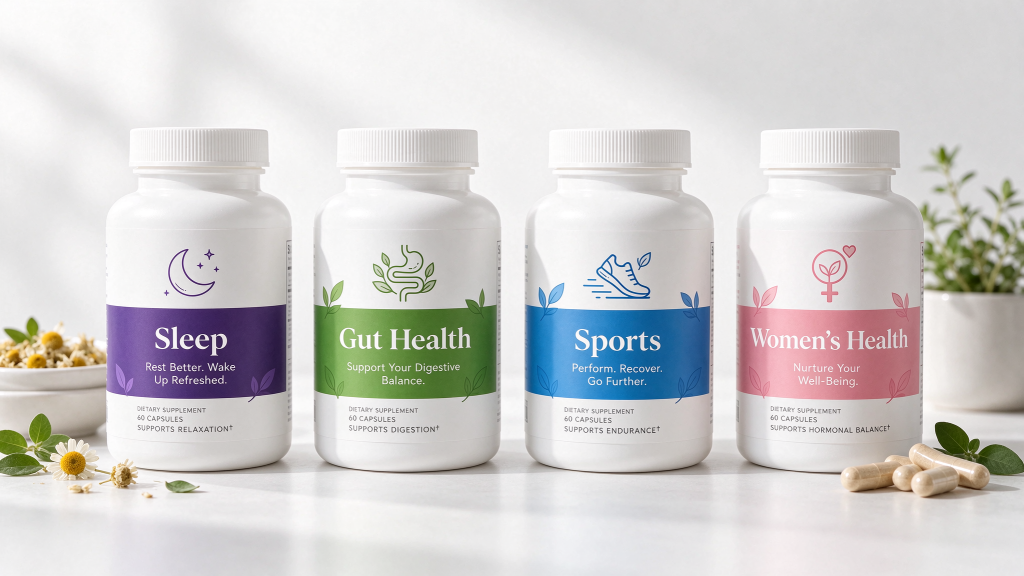
- Check the supplier catalog before you commit. A good shopify nutrition supplier will have a deep catalog in your chosen niche. NutFill, for example, stocks white-label formulas across sleep, gut, women’s health, and sports nutrition with no MOQ and 6–10 day US/EU shipping. Before you build a brand around a niche, confirm your supplier can actually serve it without you custom-developing a formula.
- Plan your lateral expansion. A gut-health brand can expand into skin health (gut-skin axis), immune support, and digestive-targeted fiber without rebranding. A sleep brand can expand into stress, recovery, and evening rituals. Choose a niche that has a natural “adjacent” set of products you will want in year two.
What This Means for Your Supplier Relationship
When you operate as a niche store, your relationship with your supplier changes. Instead of ordering one bottle of ten different SKUs, you order steadily from a focused set of formulas. That makes quality control easier to monitor, makes shipping predictable, and lets you build a relationship with a partner who understands your audience. Platforms like the one behind https://apps.shopify.com/nutfill are built for exactly this pattern: pick a niche, list the 3–5 SKUs that serve it, and let orders sync natively to your Shopify store. Strict batch QC means the products your repeat customers receive are the same ones they ordered the first time, which is the whole point of building a brand around a niche.
FAQ
Can I start with a niche and later add general products?
Yes, but expand laterally, not broadly. A sleep brand can add stress support, recovery, and evening tea. It should not suddenly add protein powder and a men’s multivitamin. Lateral expansion deepens authority; broad expansion dilutes it.
What if my niche is too small to hit $10K/month?
Most founders overestimate how small their niche is. Perimenopause alone affects 47 million women in the US. Chronic sleep issues affect 30% of adults. You do not need a mass market to build a profitable brand — you need a dedicated audience with a recurring need and a 70–85% margin on every order.
Do I have to be an expert in the niche to sell it?
No, but you have to be willing to learn it deeply. The best niche founders are often people who personally had the problem. If you are not in the audience, spend 20 hours reading forums, subreddits, and customer reviews before you commit. You will not out-research someone who lives the problem.
How many SKUs should I launch with?
Three to five. A hero product, a supporting product, and a subscription bundle. More than five on day one dilutes your messaging and your ad spend. You can add more once the hero product has proven itself with real customers.
Conclusion
The generalist supplement store is a 2018 idea that stopped working once Google started rewarding topical authority and once ad platforms started penalizing broad targeting. The brands that win on Shopify in 2026 are the ones that pick an audience, publish deeply for that audience, and partner with a shopify nutrition supplier who can serve that audience’s needs without inventory risk. Pick your niche, stock three focused SKUs, write 50 posts that matter to that one group of people, and the rankings, the subscriptions, and the referrals will compound. The generalists will still be casting a wide net while you have already built something people trust.
