Private Label Supplement Supplier: A 30-Day Launch Checklist for New Brands
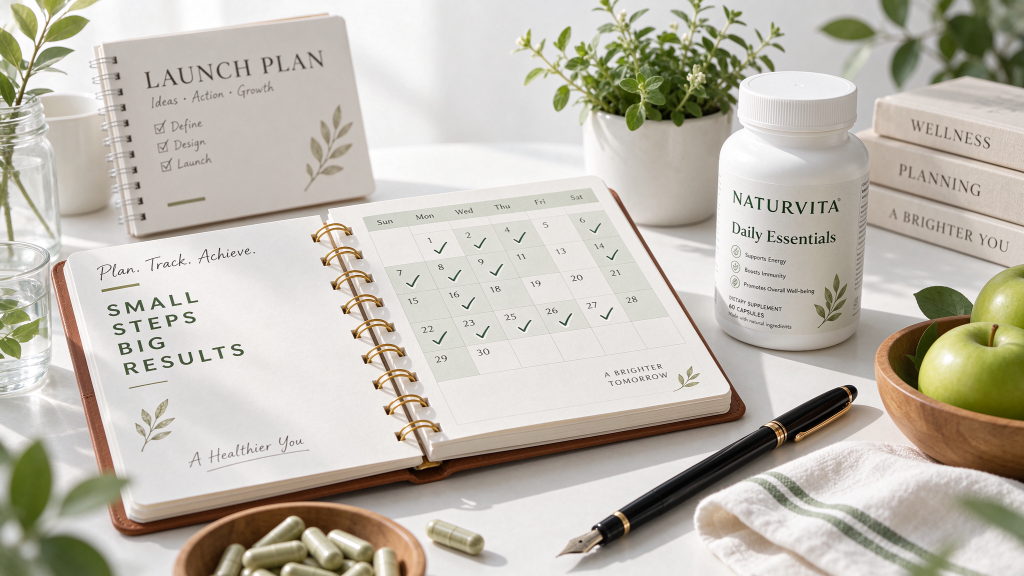
Most supplement launches fail not because the product is bad, but because the founder spends six months “preparing” and never actually opens the store. The cure is a 30-day plan that forces decisions, ships a real store, and puts the first customer order on the board before the planning paralysis sets in. This checklist is built around the modern private label supplement supplier model — stocked formulas, no MOQ, native Shopify sync — so you don’t spend your launch window negotiating with factories or waiting on a container. If you execute every step below, you will have a live brand, three products, and your first paid customer by day 30.
Days 1–7: Niche and Supplier Selection
The first week is about narrowing, not building. Resist the urge to design a logo on day one. You are choosing an audience and a partner.
Day 1: Pick the audience, not the product
Write one sentence that answers: “Who is this brand for, and what exact problem are we solving?” Avoid generic answers like “people who want to be healthy.” Good examples: “women 42–55 dealing with perimenopause sleep disruption” or “runners over 35 who want faster joint recovery.” If you can’t name the audience, you can’t build the store.
Day 2: Validate the niche with demand signals
Spend the day on Reddit, Facebook groups, Amazon reviews, and TikTok. Look for the repeated frustrations people describe. You are looking for two signals: a problem people talk about openly, and existing products they complain about. Both are opportunities.
Day 3: Shortlist 2–3 supplier candidates
You want a partner that stocks finished white-label formulas, has no minimum order quantity, ships to US/EU customers in under 10 days, and syncs natively to Shopify. Compare catalog depth in your niche, shipping speed, quality control standards, and onboarding effort. NutFill is a natural fit for this checklist — its Shopify app at https://apps.shopify.com/nutfill gives you a stocked catalog of white-label supplements, no MOQ on any SKU, 6–10 day US/EU delivery, and strict batch QC, so you skip the factory negotiation entirely.
Day 4: Order samples
Before you list anything, taste it, smell it, and feel the label. You are going to put your brand on this bottle. If you wouldn’t drink it yourself, don’t sell it. Order samples of the 3–5 SKUs that fit your niche.
Day 5: Confirm your brand positioning
Write your one-line positioning, your price point, and your guarantee. A supplement brand at launch usually prices between $29 and $49 per bottle, with a subscribe-and-save offer that locks in a 70–85% margin after product and fulfillment cost. Decide your guarantee now — “love it or your money back” is standard and removes a real objection.
Day 6: Set up the legal basics
Register your business, get an EIN, set up a business bank account, and install Shopify. You do not need a trademark on day one, but you do need a real entity behind the store so payments and suppliers can pay out.
Day 7: Install the supplier app and connect Shopify
Complete the onboarding with your chosen private label supplement supplier. Confirm products sync, inventory updates, and tracking flows back to orders. This is the technical foundation; get it working now, not after you have customers.
Days 8–14: Branding and Product Listings
Week two is about making the store look like a brand, not a dropshipping store. You are allowed to be imperfect; you are not allowed to be generic.
Day 8: Lock your visual identity
Choose a brand name, a simple logo, two brand colors, and a typography pair. You do not need a 50-page brand guide. You need a logo that looks clean on a label, colors that photograph well, and a font that is readable on mobile.
Day 9: Build your home page
One hero section that states the audience and the promise, three product cards, a short “why us” section, and an email capture. That is enough. Resist the urge to add pop-ups, countdown timers, and twenty sections on day one.
Day 10: List your hero product
Pick the single SKU that best solves your audience’s main problem. Write a product page that leads with the outcome, not the ingredients. Include a clear ingredient panel, dosing, expected timeframe, and your guarantee. Use structure-function language carefully — make claims you can substantiate, and include the standard dietary supplement disclaimer.
Day 11: List two supporting products
Add a second SKU that complements the hero (a routine partner) and a bundle or subscribe-and-save option. Three products is enough. More than five on launch day dilutes your message and your ad budget.
Day 12: Write your trust pages
About, Contact, Shipping, Returns, Privacy, Terms. These pages are not optional. Customers who are about to put $39 on a card want to see that a real company is behind the bottle. Mention your supplier’s quality control here — customers care that every batch is inspected and documented.
Day 13: Set up email and SMS basics
Install Klaviyo or your email tool of choice. Build three flows: welcome series, abandoned cart, and post-purchase follow-up. The post-purchase flow is where you ask for a review and offer the subscription. Do not skip it; it is where the 70–85% margin compounds.
Day 14: Day-of-fresh eyes review
Walk through your own store as a customer. Click every button, test the checkout, place a $1 test order to yourself. Note anything that feels unfinished and fix it today. Tomorrow you start sending traffic.
Days 15–21: Content and Traffic Setup
Week three is about turning on demand. You do not need a viral moment. You need a small, steady stream of targeted strangers who match your audience.
Day 15: Publish your first three blog posts
Write three posts that answer the questions your audience actually asks. Not “what are supplements” — that is too broad. Write “why sleep gets worse in perimenopause,” “3 mistakes runners make with joint recovery,” or whatever your audience is searching for. Each post should naturally mention your product once, in context.
Day 16: Set up your ad accounts and pixels
Install Meta Pixel, Google Ads tag, and the Shopify GA4 connection. Verify your domains. Spend an hour making sure the events fire correctly. Bad tracking on day one is the most expensive mistake you can make in week three.
Day 17: Record three raw ad creatives
You in front of your phone, talking to camera, explaining the problem your product solves. No fancy production. Three versions: a problem hook, a personal story, and a “myth busting” angle. You are testing hooks, not making commercials.
Day 18: Launch a small test ad budget
Spend $20–$40 a day on a cold audience that matches your niche. Run all three creatives against the same product page. Do not optimize for purchases yet — optimize for add-to-cart or view-content. You are learning which hook resonates.
Day 19: Build your organic social presence
Pick one platform where your audience lives (TikTok or Instagram for most niches, LinkedIn for professional/cognitive support). Post three short pieces of value today. No hard sells. Teach, answer questions, show behind the scenes of your brand.
Day 20: Set up your customer support inbox
Create saved replies for the questions you already know you will get: shipping time, ingredient questions, return policy, subscription changes. A private label supplement supplier that ships in 6–10 days means you can give customers a precise window, which cuts “where is my order” emails by half.
Day 21: Mid-month review
Pull the data. Which ad creative got the cheapest add-to-cart? Which blog post got the most traffic? Which email in your welcome series had the highest click rate? Double down on the winner, pause the losers. This is a small scale rehearsal for the optimization stage of your business.
Days 22–30: Soft Launch and First Orders
The final week is about getting real customers, not perfecting the store. You will never be ready. You launch now.
Day 22: Soft launch to your warm network
Tell the people who already know you — friends, followers, past communities — that your store is live. Offer a launch discount. You are not looking for scale; you are looking for the first 5–10 orders and the first testimonials.
Day 23: Raise ad spend on the winning creative
Take the hook that worked in your test and double the budget. You are not trying to profit on day one; you are trying to acquire data and your first cold customers. Aim for 2–5 orders a day.
Day 24: Collect your first reviews
When the first orders land, follow up personally. Ask customers for feedback, a photo, or a review. Social proof on day one is worth more than a month of polish on the home page.
Day 25: Launch your subscription offer
Make sure the subscribe-and-save option is prominent on your product page. Offer 15–20% off for subscribers. This is where your long-term revenue lives, and it should be available from the very first customer, not added six months later.
Day 26: Fix the top support questions
Whatever emails you have received so far, turn the answer into a FAQ section on your product page. Every question you answer publicly is one less email you have to answer privately.
Day 27: Add one piece of social proof
Add the first review, the first UGC photo, or the first press mention to your home page. Even one real customer quote lifts conversion measurably.
Day 28: Audit your supplier experience
Order one of your own products. Watch the full journey: order placed, sync to supplier, fulfillment, delivery, packaging, insert. Strict quality control matters most when you can see it with your own eyes. Note anything that feels off and fix it before it becomes a customer complaint.
Day 29: Plan month two
Based on the data from launch, choose one thing to double down on (an ad angle, a content topic, a SKU) and one thing to stop doing. Write it down. Month two is about doubling the things that worked, not adding new experiments.
Day 30: Celebrate, then keep going
If you have followed this checklist, you have a live store, three products, at least a handful of real customers, an ad channel that works, and a content engine that has started. You are now in the optimization stage. The launch is over; the business begins.
Weekly Milestones at a Glance
| Week | Focus | Milestone by Day End |
|---|---|---|
| Week 1 (Days 1–7) | Niche + supplier selection | Audience chosen, supplier connected, samples ordered, Shopify installed |
| Week 2 (Days 8–14) | Branding + product listings | Home page live, 3 products listed, trust pages up, email flows built |
| Week 3 (Days 15–21) | Content + traffic setup | 3 blog posts live, ads running, organic profile active, tracking verified |
| Week 4 (Days 22–30) | Soft launch + first orders | Real customers acquired, reviews collected, subscription live, month-two plan written |
FAQ
Can I really launch a supplement brand in 30 days?
Yes, if you use a stocked, no-MOQ private label model. The 30-day timeline is impossible if you are developing a custom formula, negotiating a factory run, or importing your own inventory. It is realistic when your partner already has finished, tested products ready to ship under your brand. The hard work is in positioning and traffic, not in manufacturing.
How much money do I need for the 30 days?
Plan for roughly $500–$1,500: samples, Shopify plan, your email tool, and a small ad test budget. Because you are not pre-buying inventory and there is no MOQ, your cost of goods is only spent when a customer orders. That is the whole point of the modern model — your launch budget goes to learning, not to stock on a shelf.
What if I don’t get any orders in the first 30 days?
That is information, not failure. Check three things first: is your offer specific to a real audience problem, are your ads reaching people who actually match that audience, and does your product page make the outcome obvious? Most launch failures come from one of those three, not from the product itself. Fix the leak and keep going.
Do I need FDA approval to sell supplements?
Supplements do not require pre-market FDA approval in the way drugs do, but the manufacturer must follow FDA current good manufacturing practices, and you as the brand owner are responsible for truthful labeling and substantiated claims. A vetted private label supplement supplier handles the manufacturing-side compliance; you handle your website and your marketing language. When in doubt, keep claims conservative and consult a professional for anything specific.
Conclusion
A 30-day launch is not about speed for its own sake. It is about forcing decisions, killing perfectionism, and getting your brand in front of real customers while you still have the energy to learn from them. With the right private label supplement supplier — one that offers no MOQ, native Shopify sync, 6–10 day shipping, and strict batch QC — the manufacturing side of launch is solved before you begin. Your only job for the next 30 days is to choose an audience, tell the truth about the problem you solve, and put the store in front of the people who need it. Do that, and by day 30 you will have something most would-be founders never build: a real business, with real orders, and a real reason to keep going.
