Health Product Fulfillment: Why Supplements Need a Warehouse Built for Health, Not Apparel
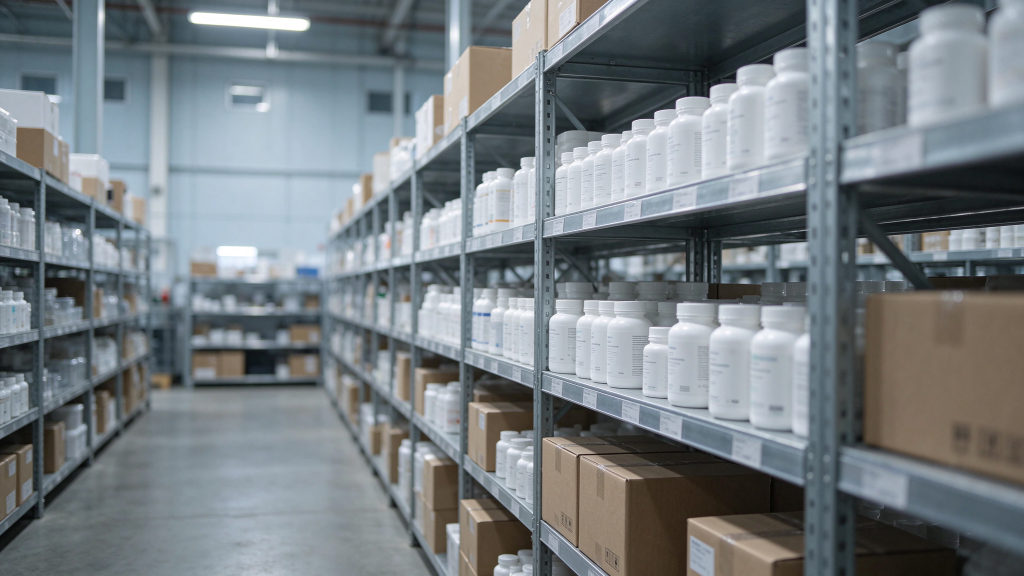
When a Shopify supplement brand scales past the first hundred orders, the founder usually does the obvious thing: plugs in the biggest, cheapest generalist 3PL and moves on. Three months later, they are fielding support tickets about melted gummies, crushed softgels, powder leaking through mailers, and bottles shipped with the wrong expiration date. Health product fulfillment is not the same problem as shipping hoodies or phone cases, and a warehouse optimized for apparel will quietly destroy a supplement brand’s reviews. This post explains what a health-specific warehouse actually does, why those steps matter, and what to ask a 3PL before you hand over your customer experience.
Why a Generalist 3PL Fails Supplements
A generalist third-party logistics provider is built around throughput: fast putaway, fast pick, fast pack, fast ship. Those are real skills, and they work beautifully for folded t-shirts, mugs, and stickers. Supplements sit in a different category because the product itself is sensitive, regulated, and tied to a specific lot with a finite shelf life. The operational habits that make an apparel 3PL cheap are exactly the habits that break a supplement shipment.
- No lot tracking. Apparel SKUs are not traced by production batch. Supplements are. If a recall happens, you need to know exactly which customers got which lot.
- No expiration rotation. A shirt from 2022 is fine to ship in 2026. A supplement from 2022 is not. Without FEFO (first-expired, first-out) picking, your warehouse will ship the freshest bottles first and leave the oldest ones to expire on the shelf.
- No climate control. Heat and humidity degrade oils, melt softgels, and ruin probiotics. A non-climate-controlled warehouse in a southern summer is a supplement graveyard.
- No cGMP awareness. Apparel pickers do not need to know what cGMP means. Supplement pickers should, because the way product is handled on the shelf is part of the quality story.
The gap is not that the generalist is careless. It is that their operating model was never designed for a product category where a broken seal is a customer health issue, not a cosmetic defect.
Lot Traceability: Why It Is the Non-Negotiable Baseline
Lot traceability sounds like a compliance buzzword until the day you need it. Imagine a supplier tells you a specific lot of your best-selling gummy has a contamination concern. You have 72 hours to identify every customer who received that lot and reach out. If your warehouse tracks lot numbers at pick, you run a report. If it does not, you are manually opening months of orders and guessing.
- Inbound lot capture. Every pallet received is logged with the manufacturer lot number, the expiration date, and the quantity. This happens before the product hits the shelf.
- Lot-attached picking. When an order is picked, the system records which lot was pulled for each SKU, tied to the Shopify order ID.
- Customer-level trace. Any order can be reverse-searched: which lot, which expiration, which supplier, which date it left the building.
- Recall readiness. A recall list is a filtered report, not a forensic archaeology project.
For a small brand, lot traceability also matters on a smaller scale. If a customer emails saying their bottle tastes off, you can tell them the lot, compare it to the CoA, and decide whether to reship or escalate. Without it, you just reship every time and eat the cost.
Expiration Rotation and Shelf-Life Hygiene
Most e-commerce warehouses pick FIFO: first in, first out. Supplements require FEFO: first expired, first out. These sound similar but they are operationally different. FIFO pulls the oldest received stock. FEFO pulls the soonest-to-expire stock, regardless of when it arrived. In a healthy supplement operation, these usually align, but when two lots of the same SKU overlap, FEFO protects the customer.
| Shelf Life Left at Ship | Customer Experience | Action for the Brand |
|---|---|---|
| 12+ months | Healthy. Customer can finish the bottle and reorder. | Normal fulfillment. |
| 6–12 months | Acceptable for a 30-day supply; tight for a 90-day supply. | Flag in inventory; prioritize sale. |
| 3–6 months | Risky. Customer opens the bottle near expiration and feels cheated. | Do not ship to new customers. Use for internal samples or promotions. |
| Under 3 months | Unacceptable. Refund risk and review damage. | Quarantine. Do not ship under any customer order. |
A health-specific warehouse enforces this logic automatically. A generalist warehouse does not know your shelf-life thresholds, and it will happily ship a 60-day supply that expires in 45 days.
Climate Control and the Enemy Is Heat
Heat is the silent killer of supplement quality. Fish oil oxidizes and goes rancid. Probiotics die. Softgels soften, stick together, and leak. Vitamins degrade. Essential oil capsules lose potency. A warehouse that feels comfortable to a picker in jeans is not necessarily cool enough for the product, and a summer unload from a non-temperature-controlled truck can damage a pallet before it even reaches the shelf.
- Ambient temperature range. Most finished supplements are happiest between 15°C and 25°C (59°F–77°F), with relative humidity under 60%. Probiotics and some oils require tighter control.
- Humidity control. Moisture causes powder caking, gummy sticking, and label peeling. A dehumidified space is not optional for hygroscopic products.
- Inbound inspection. A health-aware warehouse will check for heat damage during receiving and quarantine a pallet that arrives warm, not just count the boxes.
- Packaging for transit. Insulated mailers, heat-resistant bubble wrap, and shaded shipping windows matter for destinations with extreme summer heat.
If your warehouse cannot tell you the temperature and humidity range the product is stored in, that is a gap you should close before scaling ad spend.
Sealed-Bottle QC and the Damage Modes Generalists Miss
Supplements fail in predictable ways, and a health-specific warehouse has a QC step for each one. A generalist warehouse, picking in bulk throughput mode, does not. The result is a steady drip of support tickets that erode your review score.
- Crushed softgels. Oil-based softgels crack under stacking pressure. They need to be packed upright with cushioning, not thrown into a bag with a heavy supplement bottle on top.
- Powder leakage. Protein powders, magnesium powders, and drink mixes leak through loose caps. The warehouse should torque caps to spec and visually inspect seams.
- Broken induction seals. A broken seal means the product has been opened or compromised. This is not a cosmetic defect; it is a safety issue. Sealed-bottle QC catches it before it ships.
- Melted and fused gummies. Heat exposure fuses gummies together. A post-pick visual check catches the worst of it.
- Label damage in transit. Moisture and friction peel labels. A health-aware pack uses an outer mailer that protects the bottle, not a bare bottle in a polybag.
- Wrong bottle, wrong count, wrong lot. A pre-ship verification step confirms the SKU, the quantity, and the lot match the order.
At NutFill, strict QC on sealed bottles, lot capture, and 6–10 day delivery to U.S. and EU customers are the reason Shopify sellers switch off their generalist 3PLs. Because the model is no-MOQ white-label dropshipping, you do not rent a warehouse or commit to inventory; the health-grade handling is part of the service. The Shopify app at https://apps.shopify.com/nutfill connects directly to your storefront, and every order that leaves the facility has been through the same sealed-bottle inspection your own QC team would do if you had one.
The Margin Math: Why Health-Grade Fulfillment Pays for Itself
It is true that a health-aware 3PL often charges a few cents more per order than a throughput-first generalist. The math only looks worse if you compare the line item in isolation. Compare it against the refund rate, the replacement orders, the negative reviews, and the support tickets, and the health-grade warehouse almost always wins.
Margins in white-label supplements typically run 70–85% at DTC, which is why the category is attractive in the first place. A 2% refund rate from shipping expired bottles, melted gummies, or crushed softgels can quietly eat a full point of margin and a chunk of ad-driven lifetime value. Spending a little more per order on a warehouse that actually handles the product correctly is one of the highest-return operating decisions a supplement brand makes.
FAQ: Health Product Fulfillment for Supplement Brands
Can I use my own garage or home for supplement fulfillment at first?
Legally and practically, no. Storing and shipping dietary supplements out of a home space creates cGMP, allergen, and temperature-control problems that most small brands underestimate. A no-MOQ dropshipping partner lets you launch without owning inventory or a garage operation.
What is FEFO and why does it matter for supplements?
FEFO stands for first expired, first out. It means the warehouse picks the soonest-to-expire batch before newer stock. It prevents customers from receiving bottles with only weeks of shelf life left, which is one of the most common complaints in supplement reviews.
Do I need climate control for every supplement SKU?
Most finished supplements benefit from a stable, dry, ambient environment. Certain categories — probiotics, oil-based softgels, liquid tinctures, and some botanicals — are more sensitive and may need tighter temperature control. Ask your supplier what the storage guidance is for each SKU and pass that to the warehouse.
How does returns handling work for supplements?
Because supplements cannot be resold once opened, a health-grade fulfillment center typically destroys returned units rather than restocking them. The return address, the inspection workflow, and the destruction documentation should all be in place before you scale.
Conclusion
Health product fulfillment is a specialist job, and the brands that treat it like a generic shipping task pay for it in refunds, reviews, and regulatory risk. Before you connect any 3PL to your store, ask about lot traceability, FEFO expiration rotation, climate and humidity control, sealed-bottle QC, and how they handle crushed softgels, powder leaks, and damaged labels. If the answers are vague, keep looking. A partner built for supplements — with strict QC, no MOQ, and 6–10 day delivery to U.S. and EU customers, like NutFill — removes the entire category of mistakes that a generalist warehouse will eventually make. Your customers bought a health product, not a t-shirt. Fulfill it like one.
