How to Sell Supplements Online in 2026: Channels, Ads, and the Brands Winning Today
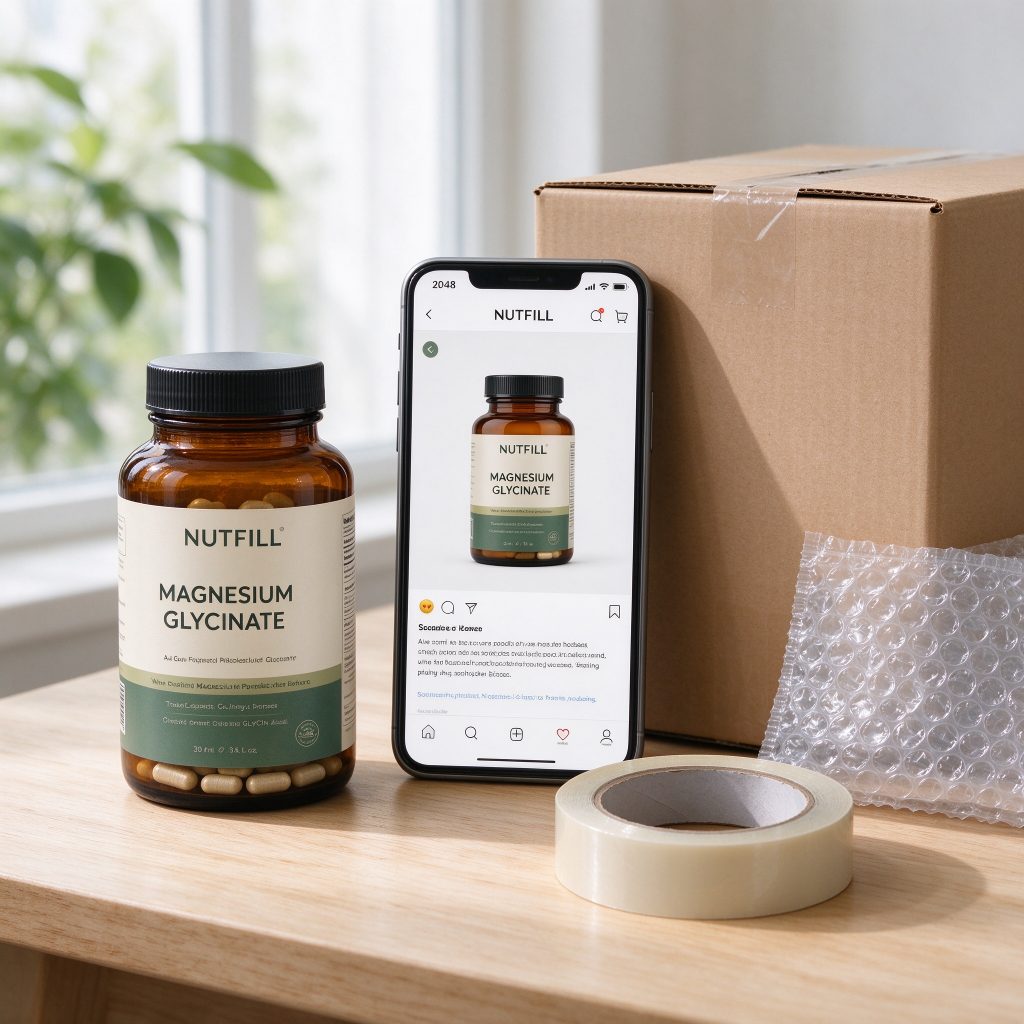
Selling supplements online in 2026 is no longer a question of which marketplace to list on — it is a question of which store you run your brand on. The brands winning the category treat their Shopify store as the operating system of the whole business: the storefront where the proof lives, the checkout where subscriptions begin, the Shopify admin where orders from every channel converge, and the analytics that decide what the next ad dollar does. The buyer who found you through a TikTok video still checks your Shopify product page, reads your reviews app, and asks an AI search engine whether you are worth trusting before they buy anywhere. This guide maps that channel landscape around a Shopify core and shows how supplement dropshipping fits the model so you can launch without holding inventory.
The Channel Map
Each channel carries a different buyer intent, cost structure, and role — and in 2026 the brands that win run them all against one Shopify store rather than as separate businesses. Most brands need more than one, but the mix depends on position:
- Your own Shopify storefront (DTC). The only channel you fully own: brand story, pricing, customer data, and subscriptions live here. Your Shopify store is where the pixel fires, where Shopify analytics attributes every sale, and where subscribe-and-save checkout options turn one-off buyers into recurring revenue. It is where margins are protected and where every other channel should point.
- Shopify Markets (international). The same storefront becomes a multi-market operation: localized currencies, duties, and domain handling let a U.S. private label supplements brand sell into Canada, the U.K., the EU, and Australia from one Shopify admin instead of standing up a separate store per country.
- Amazon, connected through Shopify. The largest discovery surface for supplements, with verification programs that now gate listings. Shopify’s Amazon integration syncs products, inventory, and orders so an Amazon sale still flows into the same Shopify admin — and the same fulfillment feed — rather than becoming a disconnected business.
- TikTok Shop and social commerce. Discovery-driven, impulse-friendly, and shaped by creator content. Connected as a sales channel inside Shopify, TikTok Shop orders land in your Shopify admin alongside storefront orders, so inserts and subscription offers follow the buyer wherever they bought.
- Walmart Marketplace and other retailers. Incremental reach for brands whose packaging sells on a shelf-like listing — synced through Shopify so inventory never runs out of sync.
- Wholesale and retail partnerships. Not strictly online, but often the next step: a positioned brand with proof can move from DTC into retail without discounting the prices on its Shopify store.
The strategic rule stays simple: use discovery channels — Amazon, TikTok, search ads — to acquire attention, and route it to the Shopify store where subscriptions, customer accounts, and repeat orders are captured. A brand that sells everywhere but owns no store data is renting its growth; the brand that routes every channel into one Shopify admin owns the customer, the pixel, and the lifetime value.
Channel Economics at a Glance
The channel mix shapes the margin story more than most brands expect. This is how the channels compare for a private-label supplement brand running on Shopify:
| Channel | Buyer intent | Margin impact | Best for |
|---|---|---|---|
| Own Shopify storefront (DTC) | High — brand-aware buyers | Protects the full 70–85% range | Subscriptions, customer data, brand building |
| Amazon (via Shopify integration) | Medium — comparison shoppers | Fees compress but still strong | Discovery, skeptical buyers |
| TikTok Shop (synced channel) | Low-medium — impulse discovery | Variable, volume-driven | Viral formats, new audiences |
| Walmart/retail | Medium — brand trust transfer | Wholesale compresses margin | Scale after positioning |
None of this changes the underlying economics: private-label supplement gross margins run 70–85% at the product level. The channel determines how much of that margin survives — the Shopify storefront protects the most, marketplaces take fees for discovery, and wholesale compresses it for volume. The winning pattern is a Shopify DTC core that captures subscriptions, with marketplace and social channels feeding attention into it — and supplement dropshipping lets you run that core without tying up capital, because Shopify orders flow straight to the fulfillment partner the moment they are placed.
Advertising That Works
Supplement advertising is regulated, which means the formats that work are the ones that persuade within the rules — and they all route back to a Shopify store that can prove the claim. The patterns that consistently convert:
- UGC and creator content. Real people showing the ritual — the unboxing, the nightly powder, the morning gummy — outsells polished studio ads because verification-minded buyers trust people like themselves. When the ad’s link lands on a Shopify product page rather than a generic listing, the pixel can tell you which creator actually sold.
- Educational creatives. Ads that teach the mechanism (“why magnesium glycinate, not oxide”) build authority while they sell. The same asset feeds ads, your Shopify blog, and the AI-assisted search answers that bring the next buyer.
- Proof-led creatives. Batch numbers, COA summaries, third-party verification, and honest FAQ screenshots turn the trust stack into advertising. A Shopify product page that displays the lab report beside add-to-cart is an ad competitors cannot copy.
- Retargeting with substance. With the Shopify pixel and Shopify analytics installed, retargeting works when it adds information, not pressure — the third educational asset converts the skeptic still verifying, and the analytics show you which asset did it.
Compliant structure/function language is not a limitation; it is a filter that keeps your ads credible. The brands that win treat the compliance boundary as brand strategy: they advertise the evidence, measure it in Shopify analytics, and let the evidence decide where the next budget goes.
The Launch-to-Scale Path
Most successful supplement brands follow the same sequence — not because it is the only way, but because it matches how trust is built, and how a Shopify store matures:
- Launch the Shopify store first. Build the storefront, product page, proof stack, reviews app, and three educational assets before any paid traffic. A brand with nowhere to route attention wastes the attention it buys — and a Shopify store with no pixel or analytics cannot learn from the traffic it does get.
- Prove the offer with a small audience. Convert a few hundred real buyers, collect honest reviews, and fix the fulfillment experience — the box, the timing, the follow-up — before scaling. This is where supplement dropshipping pays off: you test the offer with a NutFill-style fulfillment partner behind the Shopify store without holding inventory of your own.
- Add a discovery channel. Once the position is proven, connect Amazon or TikTok Shop through Shopify to reach buyers who would never find the store. Route them back with inserts, QR codes, and the subscribe-and-save offer on the product page.
- Scale the proof, not just the budget. Every scaling milestone adds evidence: more COAs published, more verified reviews, more educational content. Watch Shopify analytics to see which channel brings the buyers who actually reorder.
- Convert the channel to the subscription. The final stage of every channel is the same: turn one-off buyers into subscribers through Shopify Subscriptions or a subscription app, because the 70–85% margin earned once is a transaction, and earned monthly it is the business.
FAQ
Which channel should a new supplement brand start with?
Start with your own Shopify store, even though it has no traffic yet. The reason is not traffic; it is control — the store is where you build the product page, the proof stack, the subscription offer, the pixel, and the analytics. Every paid channel becomes more efficient when it routes to an owned destination. Launch owned, prove the offer, then connect discovery channels.
Is TikTok Shop worth it for supplements?
For the right product, yes. TikTok rewards products with a visible ritual and a shareable story, and creator content can compress months of awareness into weeks. Connected through Shopify, TikTok Shop orders flow into the same admin as storefront sales, so fulfillment and inserts stay consistent. The caveat is compliance: claims must stay within FDA rules, and the fulfillment partner must flex across sales channels without re-platforming inventory.
How much should I spend on advertising a new supplement brand? Spend to learn, not to scale — the first budget answers which creative, audience, and offer converts, and the Shopify pixel and analytics are what make that learning visible. The pattern that works: small test budgets across Meta, TikTok, and Google, scale only the proven creative, and route every conversion to the Shopify store where the subscription offer lives. Acquisition spend that does not feed retention is rent.
Do I need to sell on Amazon to succeed?
No, but Amazon is where skeptical supplement buyers search, and its verification programs display compliance evidence at the point of sale. Many brands build their Shopify DTC first and add Amazon through Shopify’s marketplace integration once the position and proof stack are solid. The channel is a discovery surface, not a requirement — the requirement is a clear position and evidence to back it.
The brands winning supplements online in 2026 are not the loudest advertisers; they are the best-routed brands. Own the Shopify store, use discovery channels for attention, advertise the evidence and measure it in Shopify analytics, and convert every channel into a subscription. Run supplement dropshipping behind the store so capital stays flexible. Do that, and the 70–85% margins of private-label supplements become the reward for a strategy — not the leftover of a discount.
