Private Label Supplement Platform: Why the ‘Find a Factory’ Playbook Is Dead
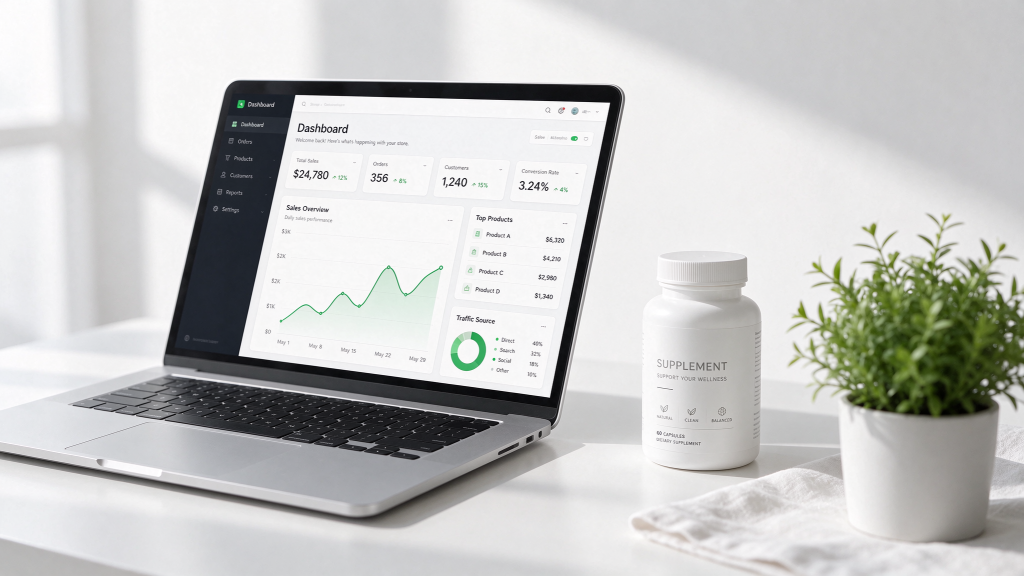
If you started selling supplements online three or four years ago, the playbook felt obvious: book a flight to Guangzhou or Yiwu, walk a trade show floor, hand a factory owner your formula idea, negotiate a 500-bottle minimum, design a label in Photoshop, and figure out shipping on your own. That model worked for a narrow slice of founders who had cash, translation help, and months of patience. In 2026, it is dead. Modern sellers don’t want to negotiate a container of capsules — they want a private label supplement platform that lets them launch a branded store in a weekend, test a SKU in a week, and reorder without touching a single pallet. The old factory-direct route is now a trap, and this post explains why.
What the Old Playbook Actually Cost You
The factory-first approach sounds cheaper on a per-bottle basis, and that illusion is the whole problem. When you price a supplement at the factory gate, you see the $2.80 unit cost and imagine a $29.99 retail price. What you don’t see until later is the stack of hidden costs that eats most of the margin before a single bottle ships to a customer.
- Inventory you can’t move. A 500-bottle minimum on a formula your audience doesn’t want is not inventory — it’s a tax write-off. Most new brands launch three SKUs at 500 units each and are sitting on 1,500 bottles six months later.
- Tooling and label setup fees. Custom molds, label plates, barcode registration, and artwork revisions quietly add $1,000 to $3,000 before production even begins.
- Freight, duties, and warehousing. Sea freight takes 35–45 days, duties land unexpectedly, and once the pallet reaches your country you still need a 3PL to store it, pick it, pack it, and hand it to USPS.
- Communication tax. Email chains across 12 time zones, WeChat follow-ups, samples that arrive wrong, label proofs that take a week to come back. Every decision costs you days.
- Compliance exposure. If the factory’s FDA registration is lapsed, or a COA doesn’t match what you sold to your customers, the regulatory letter lands on your desk — not theirs.
By the time you add all of that up, the “cheap” factory bottle is often more expensive than a white-label dropshipping unit, and you carry all the risk. The margin that should have been 70–85% instead shrinks to 35–45%, and you are out of runway before you have learned what your market actually wants.
Why the Model Broke in 2026
Three shifts in the supplement market have made the old factory-direct route obsolete for anyone who isn’t running a $50M brand with a full-time supply chain team.
Buyer Expectations Got Fast
Shopify customers now expect 3–5 day delivery on almost everything. When you are shipping a container from China and then routing it through your own warehouse, you cannot compete with the two-day Prime baseline on delivery speed. Customers who wait three weeks for a gummy they saw on TikTok will ask for a refund and never come back. A modern private label supplement platform already stocks finished goods in US and EU warehouses, so your customer gets their order in 6–10 days without you touching logistics.
SKU Lifecycles Got Short
Trends in supplements move in 6–9 month windows, not multi-year product cycles. One quarter it’s ashwagandha gummies; the next it’s grape-seed extract; the quarter after that it’s a menopause-support blend. If you have 500 bottles of last season’s formula on a shelf, you are funding yesterday’s trend out of tomorrow’s ad budget. With no-MOQ dropshipping, you switch formulas the week the trend peaks, and you never pay to warehouse the loser.
Compliance Got Tighter
The FDA, FTC, and EU’s supplement regulations have all sharpened in the last two years. Structure-function claims need substantiation, label claims need to match the COA, and cross-border sellers are getting audited more aggressively. A factory you found at a trade show may not have the documentation your Shopify store needs. A vetted platform ships every batch with a COA, an ingredient panel, and a claims review, which means your store stays compliant without you hiring a regulatory consultant.
The New Model: Platform-Native Selling
The replacement model is not “find a better factory.” It is “stop being a logistics company.” The new private label supplement platform bundles the work that used to take a small team into one dashboard:
- Stocked formulas. A catalog of finished, tested products — gummies, capsules, powders, liquids — that already have COAs, ingredient panels, and FDA-registered manufacturing behind them. You pick the ones that fit your niche.
- Zero minimum order quantity. You list a product, the first customer orders, the platform picks, packs, and ships that single bottle under your brand. You never pre-buy inventory.
- Native Shopify sync. Products, pricing, inventory levels, and tracking numbers flow automatically between your store and the platform. You don’t copy-paste orders at the end of the day.
- White-label packaging. Your logo, your label, your brand colors on the bottle. The customer sees your brand, not the supplier’s.
- Built-in quality control. Batch inspection, expiration dating, and damage handling are handled before the parcel leaves the warehouse.
This is the model NutFill built from day one. Its Shopify app at https://apps.shopify.com/nutfill gives sellers a stocked catalog of white-label supplements, no MOQ on any SKU, US/EU delivery in 6–10 days, and strict batch-level QC. A seller can pick a product, push it to their store, and make their first sale the same afternoon — no samples to negotiate, no pallet to order, no customs broker to call.
What You Give Up Versus What You Gain
Critics of the platform model will tell you that you lose control of the formula. That is true, and it is also the point. When you are a founder with one Shopify store and a small email list, formula customization is not a competitive advantage — it is a cost center. What matters at your stage is moving fast, testing cheaply, and keeping a 70–85% margin on every order.
| Dimension | Old Factory-Direct Model | Modern Platform Model |
|---|---|---|
| Minimum order | 500–1,000 units per SKU | 1 unit, no MOQ |
| Time to first sale | 8–14 weeks | Same day to same week |
| Customer delivery | 7–21 days after you fulfill | 6–10 days from checkout |
| Cash tied in inventory | $5,000–$20,000 minimum | $0 until you sell |
| Compliance burden | On you, end to end | Pre-vetted by the platform |
| Switching a failed SKU | Eat the inventory, reorder | List a new formula in minutes |
You do give up the ability to walk into a lab and co-develop a proprietary capsule blend at SKU #1. You also give up the 3 a.m. panic about whether your container cleared customs, the 90-day accounts receivable cycle with a factory, and the weekend work of packing orders in your garage. For 95% of Shopify supplement sellers, that trade is not even close.
Who Should Still Fly to China?
The factory-direct playbook is not wrong for everyone. It is wrong for you if you are early, small, or learning. It still makes sense if you have already validated a specific formula with a proven audience, you have 5,000+ monthly repeat customers, and you can comfortably absorb a 2,000-unit minimum without blinking. At that size, the per-unit savings and the formula control are real advantages. Until then, you are paying tuition to learn what the platform model already gives you for free.
FAQ
Will customers know I’m using a white-label platform?
No. The parcel ships under your brand, with your label, your logo, and your return address. The supplier’s name does not appear on the bottle, the packing slip, or the tracking notification. The experience your customer has is indistinguishable from a brand that manufactures its own products.
Is 70–85% margin realistic with dropshipping?
Yes, when you are not paying for inventory, warehousing, freight, or in-house fulfillment. White-label supplement platforms price their wholesale unit low enough that a $29–$49 retail price still leaves you a healthy margin after ad spend. You are paying for convenience and risk removal, not for a marked-up middleman.
What about quality control? I’ve heard horror stories about dropshipped supplements.
That risk is real with generic dropshippers that resell random products. A dedicated private label supplement platform handles batch-level inspection, expiration dating, and COA documentation before anything ships. NutFill, for example, runs strict QC on every batch and only stocks formulas that come from FDA-registered manufacturing partners. You still want to order a sample of every SKU before you list it — that is standard founder diligence, not a reason to avoid the model.
Can I eventually move my best sellers to my own factory?
Absolutely. That is the smart exit. Use the platform to validate three SKUs with real customer data, find out which one has the highest repeat rate, and then take that winning formula to a factory for custom production. The platform funds the learning; the factory scales the winner. That is the opposite sequence from the old playbook, and it is why it works.
Conclusion
The “find a factory, fly to China, buy a container” playbook was a 2015 strategy that survived on cheap freight, weak buyer expectations, and slow-moving trends. In 2026, it penalizes the exact thing early supplement brands need most: speed. A modern private label supplement platform removes the inventory bet, the logistics headache, and the compliance risk so you can spend your time on what actually moves a Shopify store forward — positioning, content, ads, and customer retention. If you are still planning your first trade-show trip, save the airfare. Your first launch should happen this week, not next quarter.
