Private Label Supplements: The 2026 Playbook From Launch to Proprietary Formulas
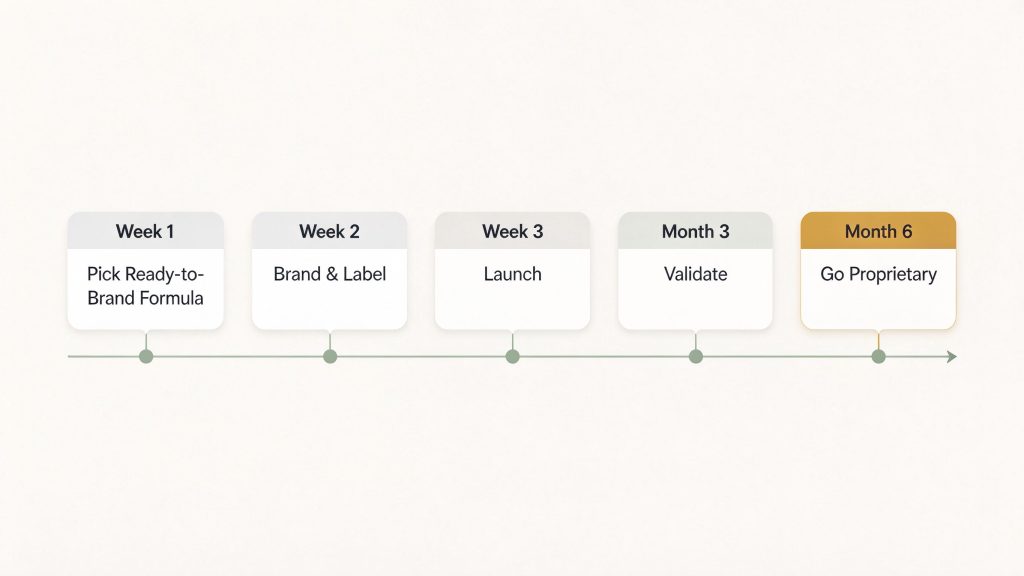
Most new supplement brands fail not because the idea was weak, but because they tried to build everything on day one: custom formulas, bulk inventory, a full catalog, and packaging that had never been tested against real customers. Private label supplements grow more reliably in stages: launch fast with a branded existing formula, validate what buyers actually want, and move into proprietary products only after the data supports it. Choosing a private label supplement supplier that can support both stages keeps the brand from rebuilding relationships halfway through, and a shopify supplement supplier with a clean storefront connection keeps orders flowing from the first launch onward. This playbook walks through each stage in order, what to do at each one, and why keeping one partner across the whole path matters more than switching for a slightly better price at any single step.
The Staged Path: Ready-to-Brand to Proprietary
A supplement brand has three broad stages, and each one answers a different question. Skipping ahead means spending money on assumptions; moving in order means spending money on evidence.
- Launch stage: prove that a branded product can reach real buyers and earn an order. The brand name, label, and storefront are built around an existing ready-to-brand formula.
- Validation stage: measure repeat purchases, feedback, claims language, price sensitivity, and which products customers ask about next. The goal is identifying winners rather than expanding the catalog.
- Proprietary stage: move proven winners into custom formulas, flavors, blends, and packaging that competitors cannot copy, backed by a customer base that already trusts the brand.
The stages are not rigid phases with hard deadlines; a brand can revisit a stage when a new product idea appears. The discipline is in the sequence: evidence before customization, validation before inventory, and a supplier relationship that survives the transition between them.
Stage One: Pick a Ready-to-Brand Formula and Launch
The first stage is about getting a real product in front of real buyers with minimal upfront risk. A catalog of formulated products lets the brand label its own name, colors, and packaging design, without owning inventory or committing to a production run.
What to do in this stage:
- Choose one focused product. Pick a formula tied to a clear customer problem rather than a broad wellness category. A narrow offer makes the page, claims, and recommendation easier to keep accurate.
- Design a label that matches the brand. The label should carry the brand identity, an honest Supplement Facts panel, the full ingredient list, and clear serving guidance. Label design support from the supplier keeps the panel compliant and the visual look intentional.
- Set up the storefront and connection. A clean integration between the storefront and the supplier means orders flow to the pack line automatically, tracking reaches the customer, and the brand does not spend time retyping orders by hand.
- Order samples first. Inspect the bottle, seal, label, freshness, and delivery speed before listing the product publicly, and fix any labeling or packaging issues before traffic arrives.
- Launch to a small warm audience. Start with followers, email contacts, creator collaborations, or an existing community, and collect direct feedback on taste, convenience, clarity of claims, and perceived value.
At this stage the brand is testing positioning, messaging, and audience fit as much as the formula itself. A shared catalog product is acceptable because differentiation comes from the brand, the audience, and the customer experience, not from a unique blend no one has bought yet.
Stage Two: Validate Demand With Real Orders
Validation turns early sales into evidence. The question is no longer whether anyone buys the product once, but whether buyers come back, talk about it, and ask for more.
Track the signals that matter:
- Repeat purchase behavior. Customers who reorder a daily wellness product or subscribe show that the product fits a recurring need.
- Direct feedback. Reviews, messages, and replies to questions reveal what buyers noticed, what confused them, and what they wish the brand sold next.
- Claims and price response. Notice which statements in the copy resonate, which questions come up about ingredients, and whether the price felt fair to the people who bought.
- Bundle and add-on interest. Requests for combinations, flavors, or complementary products point to the next SKU worth testing.
A branded supplement line can reach the 70–85% gross margin range once the brand controls pricing and positioning, and that margin is what funds samples, creative work, retention tools, and the move into custom products. The validation stage is where the brand learns which products deserve that investment.
During this stage, resist the urge to expand into unrelated categories. A brand that proves one product works should deepen that offer before chasing trends in a different wellness niche. The supplier relationship should remain stable so that quality, packaging, and fulfillment stay consistent while the brand studies the numbers.
Stage Three: Move to a Proprietary Formula
Once a SKU has earned repeat orders, clear feedback, and a steady audience, proprietary formulation becomes the right move. A custom blend, unique flavor, or specialized combination gives the brand a product competitors cannot list under their own labels, and it deepens the moat around the audience already built.
What this stage involves:
- Defining the formula around customer feedback. The proprietary blend should reflect what buyers asked for, which ingredients mattered to them, and what outcome the brand can support honestly.
- Working through formulation and testing. Custom development takes longer than pulling a catalog product, and it should include review of ingredient identity, potency, panel language, and samples before production.
- Updating the label and storefront. The new formula needs its own panel, ingredient list, claims review, and product photography, while the brand identity stays consistent with the products buyers already know.
- Phasing the transition. Keep proven catalog products available while the proprietary line is tested, so the brand does not leave its audience waiting during development.
This stage is where a brand stops being a label on someone else’s formula and becomes the owner of its own product range. It requires a partner that can support both sides of the business: catalog products at launch and custom development when the brand is ready.
Why a Private Label Supplement Platform Keeps the Whole Path Continuous
The most common costly mistake in supplement branding is switching suppliers between stages. A brand launches with one low-order partner, validates demand, then moves to a custom manufacturer that runs on different formulas, documentation, packaging standards, and fulfillment practices. Every switch breaks continuity: label files need rebuilding, quality records change, customer-facing packaging shifts, and the brand re-negotiates relationships it already established.
A private label supplement platform that covers the whole path avoids this. It supports ready-to-brand products at launch, validates demand through per-order fulfillment, and provides custom formulation later under the same roof, with the same quality control standards, the same label design workflow, and the same fulfillment team. The brand moves forward without rebuilding the foundation between stages.
A few continuity benefits matter in practice:
- Consistent quality records. Analysis certificates, ingredient documentation, and batch history stay in one place rather than being rebuilt with a new factory.
- Stable packaging and panel standards. The label language and bottle styles evolve continuously, so buyers do not notice abrupt changes that suggest the product itself changed.
- One accountable team. When a question arises about an order, an ingredient, or a label, the brand contacts the same partner rather than explaining the history to a new vendor.
- Smooth expansion. Adding a new custom product reuses existing workflows instead of starting supplier qualification, contract negotiation, and integration from scratch.
For a Shopify-based brand, the storefront connection should stay in the same flow from the first catalog launch to the custom formula release. NutFill operates this way: there is no minimum order quantity, the native Shopify app connects the storefront directly (https://apps.shopify.com/nutfill), and shipped orders typically arrive in 6–10 days. The platform combines custom formulation, label design, quality control, and per-order pack-and-ship in one service, so a brand can launch with ready-to-brand formulas, validate winners with real orders, and move into proprietary products with the same partner, without renegotiating formulas, packaging, or service levels halfway through growth.
Frequently Asked Questions
What is the difference between a ready-to-brand product and a proprietary formula?
A ready-to-brand product is an existing formulated supplement that the brand labels with its own identity; the supplier owns the formula, and other brands may list the same base product. A proprietary formula is custom-developed for this brand alone, with ingredients, blends, or flavors the brand owns, giving the product a unique identity competitors cannot copy.
How long does it take to move from launch to a custom formula?
Timing follows demand evidence rather than a fixed calendar. A brand moves to proprietary formulation after a proven SKU earns repeat purchases, steady feedback, and an audience asking for more from the brand. Rushing custom development before that evidence risks investing in a blend that the audience never asked for.
Can a brand launch several products at once?
Launching a single focused product gives cleaner feedback and easier claims review, but a small bundle of closely related products can work for a brand that already has a defined audience. The discipline is to keep the offer narrow enough that results can be interpreted clearly, rather than spreading early traffic across an unrelated catalog.
What happens to existing catalog products when a proprietary line launches?
Proven catalog products typically stay available while the custom formula is tested and introduced, so repeat customers are not left without their familiar product. Over time, proprietary versions replace shared formulas for the strongest SKUs, while catalog products remain for testing new ideas.
Why does changing suppliers hurt a growing supplement brand?
Every supplier change rebuilds documentation, label files, packaging standards, and quality history, and it can shift how products appear to repeat buyers. Staying with one partner through launch, validation, and custom development keeps quality, labeling, and fulfillment continuous, so growth feels like evolution rather than a relaunch.
Closing Thoughts
Building a supplement brand is a sequence of decisions made on evidence: choose one formula, launch to a real audience, let repeat purchases and feedback identify winners, then invest in custom products only for proven demand. The brands that scale cleanly are the ones that do not treat launch and customization as separate projects, but as one continuous relationship with a partner who supports both stages. Start fast, validate honestly, and move into proprietary products only when the audience has already shown they will come back.
