Supplement Brand Positioning in 2026: How White Label Brands Earn Trust and Repeat Buyers
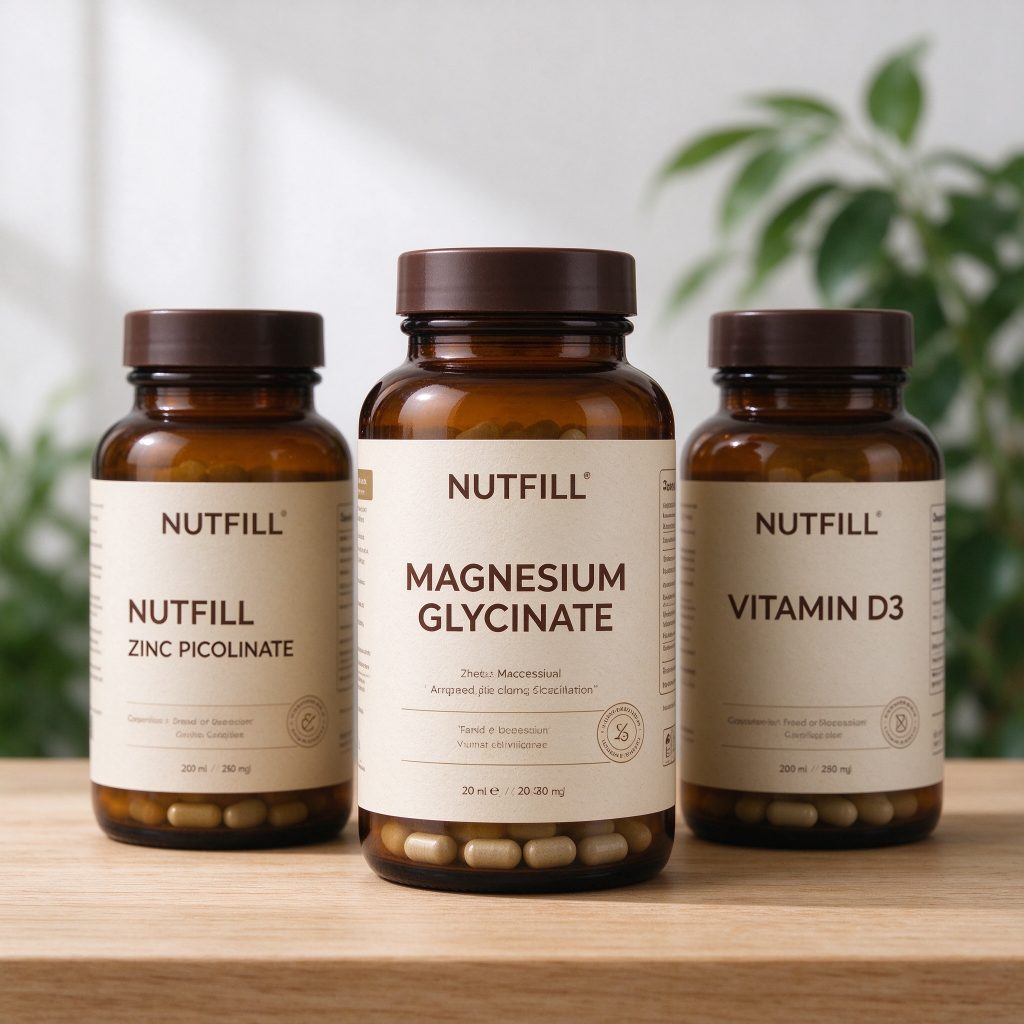
The most profitable supplement brands in 2026 are rarely the ones with the most formulas. They are the ones with the clearest position — a specific promise, aimed at a specific buyer, backed by evidence the buyer can verify. For white label supplement brands selling on a Shopify store, that position is built into the storefront itself — the product page, the brand story page, the reviews section, and the checkout. Positioning is the difference between competing on price and compounding trust for private label supplements. This guide explains what buyers verify on your Shopify store before they buy, and how to build a defensible brand position on a white label budget.
Why Positioning Matters More Than Ever in 2026
The supplement shelf — and especially the Shopify search results page — is more crowded than it has ever been. Buyers scroll past dozens of magnesium, collagen, and protein products in a single session, and most look interchangeable. On a Shopify store, that problem is literal: every product card competes for the same thumbnail, the same scroll position, and the same eight seconds of attention. The brands that win answer one question before anything else: who is this for, and why should they believe us?
Two forces make positioning urgent in 2026. First, trust is harder to earn: platform verification requirements, FDA ingredient traceability rules, and third-party audits mean buyers check before they click — and on a Shopify store, checking means scrolling your product page, opening your reviews app, and reading your brand story page. Second, the economics reward focus. Private label supplement gross margins commonly run 70–85%, but only when a brand converts a shopper into a repeat buyer. Shopify analytics makes this visible: a broad brand wins none of its audiences, while a positioned brand shows higher conversion, stronger review scores, and subscription retention that compounds margin into value.
The Trust Stack: What Buyers Actually Verify on Your Shopify Store
Trust in supplements is no longer a feeling; it is a checklist — and in 2026 that checklist is read off your product page. Each item below is a surface on your Shopify storefront where a white label brand can differentiate:
- Third-party cGMP verification on the product page. Facility audits from NSF, USP, UL, Eurofins, or Intertek signal your partner operates to FDA standards under 21 CFR Part 111. Put the badges in a gallery block on the PDP so buyers do not have to hunt.
- Batch testing and Certificates of Analysis. Buyers burned by bad batches want proof that every lot is tested, not just the first. A product page image block showing the COA for the current batch converts skeptics fast.
- Ingredient traceability. With FDA traceability requirements in effect, a brand that shows a clean chain of custody from raw material to bottle answers the hard questions. A brand story page or a dedicated Quality page in Shopify navigation is the natural home for it.
- A compliant Supplement Facts panel. A clear panel image on the PDP — correct serving size, net quantity, and ingredients — tells an educated buyer the brand knows the rules.
- Third-party reviews and social proof. A reviews app from the Shopify App Store (Judge.me, Loox, or equivalents) collects verified-purchase reviews automatically after fulfillment. Real reviews carry more weight than any claim a brand makes about itself.
- Checkout trust elements. Trust badges, secure payment icons, and clear shipping and return policies at Shopify checkout remove the last reasons to abandon a cart.
Most of these proof points are inherited from a good supplier. Positioning is not about inventing evidence; it is about deciding which evidence leads your story and arranging it on the Shopify storefront at the moment of decision.
Position Around a Job, Not a Label
The strongest supplement positions are built around a job the buyer is trying to get done — not around a category, an ingredient, or a format. A buyer shopping at 11 p.m. with sleep problems is not looking for “melatonin.” They are looking for a reliable way to fall asleep without grogginess. A buyer managing blood pressure is not looking for “magnesium glycinate.” They are looking for a daily ritual that supports numbers they actually track.
Job-based positioning changes every part of the brand — and every part of the Shopify store: the product page headline, the hero image, the packaging, the FAQ section, the follow-up emails, and the customer segments you build in Shopify admin. It also changes which keywords matter. Instead of fighting for the broad, expensive term, a positioned brand wins the specific phrase a motivated buyer types — “supplement for better sleep,” “magnesium for stress and blood pressure,” “collagen for joint comfort.” Intent is high there, competition is low, and a clear storefront wins the click. Shopify analytics shows which job phrases actually convert, so you double down on the words your buyers already use.
Three Positioning Models for White Label Supplement Brands
There is no single right position, but most winning supplement brands fall into one of three models. Each one changes how the Shopify storefront looks, what the product page leads with, and who it attracts:
| Positioning model | Core promise | Margin range | How it lives on the Shopify store |
|---|---|---|---|
| Evidence-led trust | Verified, traceable, documented — you can check everything | 70–85% | PDP leads with the COA, cGMP badges, and a reviews app showing batch consistency |
| Outcome-led | A fast, visible result for a specific need | 70–85% | PDP leads with the one-line outcome promise and a mechanism FAQ; subscribe-and-save at checkout |
| Lifestyle-led | Identity, ritual, and community around the product | 70–85% | Brand story page, community reviews, and bundles that turn the product into a routine |
Evidence-led brands lead with cGMP documentation, COAs, and sourcing, and put that proof above the fold on every PDP. Outcome-led brands lead with one specific promise and the science behind one mechanism, then make subscribe-and-save the default at Shopify checkout. Lifestyle-led brands lead with a worldview and a community — the product is the entry point, the identity is the moat — expressed through the brand story page and the store blog. Whichever model you choose, your margin stays in the 70–85% range typical of private label supplements, because positioning protects price: a buyer who believes your brand is not comparing you to the cheapest option on the page.
How to Execute Positioning on a White Label Budget
You do not need a factory, a lab, or a seven-figure marketing budget to build a position. You need discipline — and a Shopify storefront that expresses it. Here is the execution playbook:
- Pick one audience and one job. Write down the exact buyer — age, stress level, sleep habits, budget — and the moment they reach for your product. Reject every idea that serves a different buyer.
- Choose your proof anchor. Decide which item in the trust stack leads your story, then ask your white label supplier for that documentation before you design anything on Shopify.
- Say the promise in one line. If you cannot explain what your brand is for in a single sentence, the position is not clear enough. Test it on a draft product page before building the rest of the store.
- Align every touchpoint. The product page headline, packaging photography, email sequence, and unboxing note all repeat the same promise. In Shopify admin, keep a reusable brand block every page uses.
- Win the specific keyword. Optimize one product page, one collection, and one FAQ around the job-based phrase your buyer actually searches. Depth beats breadth for a small brand.
- Prove it on every order. Insert the batch number, the COA summary, and the sourcing story into the package and the post-purchase email. Every shipment — fulfilled through your supplement fulfillment partner — re-earns trust, and every review feeds your reviews app.
FAQ
Can a white label supplement brand really differentiate from competitors using the same formula?
Yes — the most common misconception in the category. Buyers rarely compare formulas side by side; they compare storefronts. The formula gets you to parity; positioning, proof on the PDP, reviews, and service decide the purchase. Two brands can sell the same magnesium glycinate, and one commands premium pricing because it owns a clearer promise, shows better evidence, and runs a better Shopify store experience.
Do I need my own manufacturing to build a trustworthy supplement brand?
No. Buyers verify the supply chain, not the ownership structure. If your white label supplier holds third-party cGMP verification, provides batch-level COAs, and documents traceability, your brand inherits that credibility — and you publish it on your Shopify storefront. What you must own is the story, the quality bar you hold the supplier to, and the consistency of the experience.
How many products should a new supplement brand launch with?
One positioned hero product outperforms a wide catalog for new brands. A single product concentrates your budget, reviews, and inventory on one job, and keeps your Shopify store focused. Add a second SKU only when the first produces repeat orders — which you can measure in Shopify analytics — and you know which audience actually bought it.
Does positioning limit growth?
It feels like a limit and functions as a filter. A clear position converts fewer but better-matched shoppers — higher conversion, stronger retention. Once established, you expand into adjacent jobs for the same buyer: new product pages, new collections, new customer segments in Shopify admin. That is how supplement brands grow without diluting what they stand for.
The supplement category rewards clarity. Choose one buyer, one job, and one proof anchor; repeat the promise across every page of your Shopify store; and let the 70–85% margins of private label supplements do the rest. The brand that knows exactly who it serves and shows exactly why it can be trusted — on the product page, in the reviews, and at checkout — is the brand buyers remember, verify, and reorder.
