Supplement Dropshipping USA: Margins, Rules, and Realistic Timelines
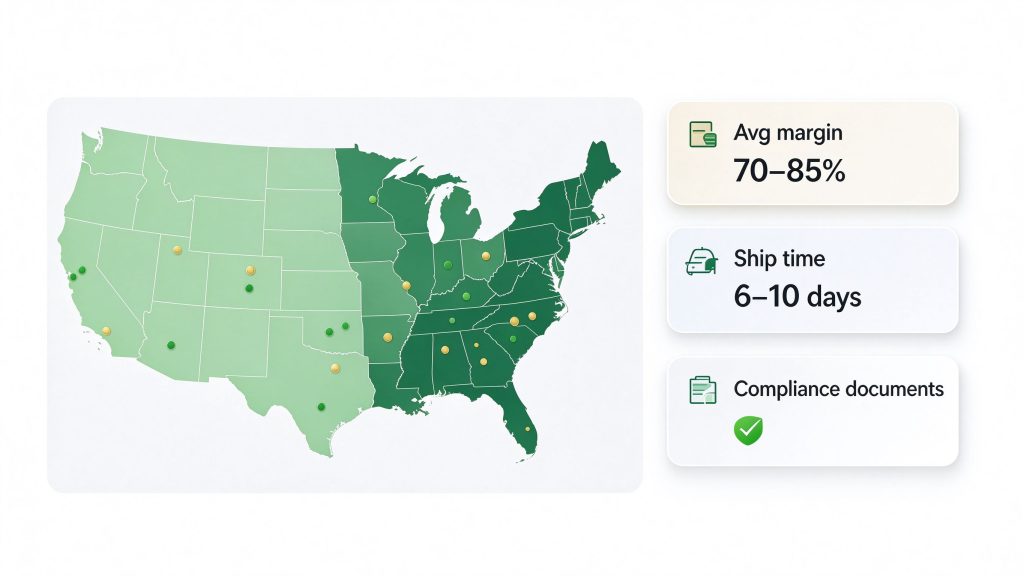
The United States is one of the most competitive wellness markets online, which means a supplement brand cannot win on price alone. Shoppers compare ingredients, labels, reviews, delivery timing, and brand trust before buying, and compliance problems surface quickly on product pages and in support questions. Supplement dropshipping usa gives founders a zero-inventory way into that market: build a branded store, let a partner pack and ship per order, and learn the audience before committing to custom production. This guide covers the margin structure that makes the model work, the labeling and claim rules a store must respect, realistic timelines from launch to validation, and how private label supplements usa builds into a brand that stays under your control.
The margin logic behind supplement dropshipping usa
The economic case for selling supplements online rests on brand positioning rather than commodity pricing. When a founder prices from landed cost, product, fulfillment, shipping, payment fees, returns, and customer acquisition are all counted before a selling price is chosen. A branded supplement line built around a clear benefit, credible label, and honest product photography can reach a 70–85% gross margin range. That margin is what funds samples, creative work, ads, email follow-up, and the retention efforts that turn a first purchase into repeat orders.
Two factors protect that margin over time. The first is control of price: a branded store sets its own price instead of competing against generic listings on a marketplace. The second is control of the customer relationship: buyers return to a brand they recognize, and repeat purchases cost less to generate than new traffic. Dropshipping removes bulk inventory risk, so the founder does not spend margin clearing stale stock after a formula fails to land.
Margin discipline also means avoiding the trap of racing toward the lowest price in the category. Wellness shoppers generally pay more for a clear benefit and a trustworthy presentation, and a store that competes on price alone squeezes the very margin it needs to fund content and support. The zero-inventory model supports a founder-led brand strategy: spend on audience and creative, keep quality consistent, and let repeat purchases carry growth instead of relying on constant discounting.
How supplement dropshipping differs from general online retail
This dropshipping model follows the same zero-inventory logic as other dropshipped categories, but the product itself changes the bar for every other area of the store. General product stores can lean on listing variety and visual appeal; supplement stores live or die on label clarity, claim honesty, ingredient credibility, and fulfillment consistency. A customer buying a supplement expects a clean panel, a real ingredient list, and a parcel that arrives sealed and intact.
The customer relationship runs deeper as well. Supplements are repeat-purchase products: a buyer who feels the product works returns for another bottle, signs up for a subscription, and tells their community. The storefront therefore functions as a wellness brand rather than a one-off listing engine. Content, answer quality, packaging, and delivery rhythm all contribute to whether that relationship repeats.
Fulfillment expectations in this market are also specific. US shoppers expect a visible delivery window, working tracking, and support that responds to parcel questions without delay. The store should publish the realistic window its partner can hold, typically within the 6–10 day range for prepared branded orders, and match the confirmation message to that window rather than promising a faster arrival.
The audience also shops supplements with more skepticism than general merchandise. Buyers compare ingredient lists, read review language about results and tolerance, and check whether the brand explains what the product does and does not do. A store that answers those questions clearly on the product page earns trust faster than one that relies on discounting, and that clarity also keeps the label and claim language aligned with what the customer was promised before purchase.
What shopify supplement dropshipping sellers must keep compliant
Compliance is part of brand building, not a paperwork task done after launch. A seller on Shopify remains responsible for what appears under its own brand on the label and product page, even when a partner handles packing.
Label basics a store should keep clean:
- A supplement facts panel that matches the actual formula, including ingredient amounts and serving size.
- A complete ingredient list that does not omit components a buyer would expect to see.
- The brand name, product name, and responsible-party information in clear readable positions.
- Batch or lot identification traceable to the packed order, kept with internal quality records.
- Packaging that keeps tablets, capsules, softgels, and powder sealed, dry, and intact through transit.
Claim discipline matters just as much as panel accuracy. Labels and pages should describe general wellness support, an ingredient’s commonly recognized role, or the goal the product serves, without promising to treat, cure, or prevent a disease. Structure-and-function style statements should be presented honestly and paired with clear panel information, and copy should avoid exaggerated results language, before-and-after claims, or medical authority the brand does not hold. A store should review every product page, label draft, and marketing caption against this standard before publishing, and should keep the same standard for influencer collaborations and email copy.
Quality documentation supports compliance on the operational side: batch records, preparation checks, and ingredient sourcing information should be held where the store can reference them when a customer or platform asks. Choosing a partner that organizes these documents as part of the pack line keeps the founder from assembling evidence under pressure later.
Private label supplements usa: building a brand that stays yours
This two-stage route moves through stages that a serious founder plans for from day one. The first stage uses ready-to-brand formulas: proven blends packaged under your own label, colors, and story, so the store launches quickly and tests which benefit resonates with the audience. The second stage begins after demand proves itself: a proprietary or custom formulation built around the brand’s own positioning, with packaging that reflects a distinct identity.
Staying with one partner across both stages is what keeps the brand coherent. Label style, pack quality, quality checks, and documentation standards do not reset when the store moves from catalog formulas to custom blends, and the partner already knows the audience, volume, and brand voice. Switching supplier after launch means rebuilding all of that under real traffic pressure, which rarely improves the customer experience.
NutFill supports that staged route for US-facing stores. It offers no minimum order quantity, a native Shopify app (https://apps.shopify.com/nutfill), and one integrated service covering custom formulation, label design, quality control, and per-order pack-and-ship, with deliveries in 6–10 days. A store starts with ready-to-brand formulas, validates which ones earn repeat interest, and then moves into a proprietary product with the same partner instead of renegotiating with a new supplier. The brand identity belongs to the founder throughout, while the partner keeps the operational side consistent from launch to scale.
Realistic timelines for launch, validation, and scaling
A realistic supplement brand timeline respects learning before scale. The first phase is positioning and preparation: choose a category and audience the founder can speak to credibly, select a small set of ready-to-brand formulas that match that audience’s stated goals, and build label and store around one clear benefit. Rushing this phase means launching products the audience did not ask for, and the store cannot recover that clarity through ads alone.
The second phase is launch and validation. Publish honest copy, usable product photography, a clear delivery window, and accessible support. Track which formulas hold attention, which earn reviews, and which produce repeat orders. This phase is for learning, not for scaling every product equally; weak performers should be retired rather than supported with discounting.
The third phase is deepening the winning line. After a formula proves repeat demand, move toward a proprietary product with the same partner, refine content around the benefit that worked, and build follow-up sequences for buyers who already purchased. Scaling paid traffic happens only after the store shows steady conversion, clean reviews, and dependable fulfillment under ordinary order volume. NutFill’s ready-to-brand catalog and same-partner custom route fit this staged timeline, so a store can test demand before committing to proprietary development. Premature advertising spend on an unproven product burns margin before the brand has learned what the audience actually values.
Frequently Asked Questions
Can a new Shopify store sell branded supplements under this model?
Yes. A store can launch branded supplement sales through a fulfillment partner that packs and ships per order, provided the label, panel, and claim language meet the store’s compliance responsibilities for its own brand. The founder remains accountable for what appears under the brand name.
What margin can a branded supplement store expect?
Margin depends on positioning, pricing, acquisition cost, and retention. A brand positioned around a clear benefit can reach a strong gross margin range when pricing is built from full landed cost; the founder should plan from actual product, fulfillment, shipping, fees, returns, and acquisition costs rather than from a target percentage alone.
What claim language should supplement pages avoid?
Avoid statements that promise treatment, cure, or prevention of disease, and avoid exaggerated results claims or medical authority the brand does not hold. Focus on general wellness support and the ingredient’s commonly recognized role, and keep the panel accurate alongside the copy.
When should a store move from ready-to-brand to a custom formula?
After a ready-to-brand product earns steady orders and genuine repeat feedback from real buyers. A custom formulation responds to demonstrated demand, and keeping the same partner preserves quality, documentation, and pack style during the transition.
What delivery window should a US supplement store publish?
Publish the window the fulfillment partner can hold regularly, matched to actual order preparation and carrier transit. Clear tracking and honest confirmation messages matter as much as the stated number, and the store should avoid a fastest-case promise the partner cannot maintain on ordinary days.
Branded supplement stores that treat the category seriously build on honest margins from positioning, labels and claims that respect the rules, delivery timing that matches real operations, and a staged path from ready-to-brand catalog to proprietary product. The zero-inventory structure removes bulk risk so the founder can focus on audience, content, and trust, while a consistent partner keeps quality and documentation steady as the brand grows. A realistic timeline moves from positioning to validation to scaling, and the brands that last are the ones that keep compliance and customer experience intact instead of chasing growth before the product has proven itself.
